The Civilities, by Kyle Bass
Set in a small town in Upstate New York in 1936 (the 75th anniversary of the beginning of the Civil War), The Civilities introduces Blessah Hart, a dynamic young Black graduate student of History and Anthropology at Cornell University, and M. Silas Jackson, an elderly white poet and Confederate army veteran who has resided in the North for 60 years. Conducting research for her graduate thesis on the narratives of surviving Confederates living in the North, Blessah reaches out to “son of the South” poet Jackson, whose poetry critiques and romanticizes the Old South, and whose current project—a long poem about the recent destruction by fire of a famed upstate NY abolitionist’s mansion—is rich with metaphors about the nation’s history and enigmatic clues about the poet’s own past. As researcher and subject, Blessah and Silas form an unlikely connection. But their relationship is tested as Blessah’s perceptive nature leads her to “read between the lines” of Silas’s work, prompting questions that strain his patience. - *Franklinstagecompany.org
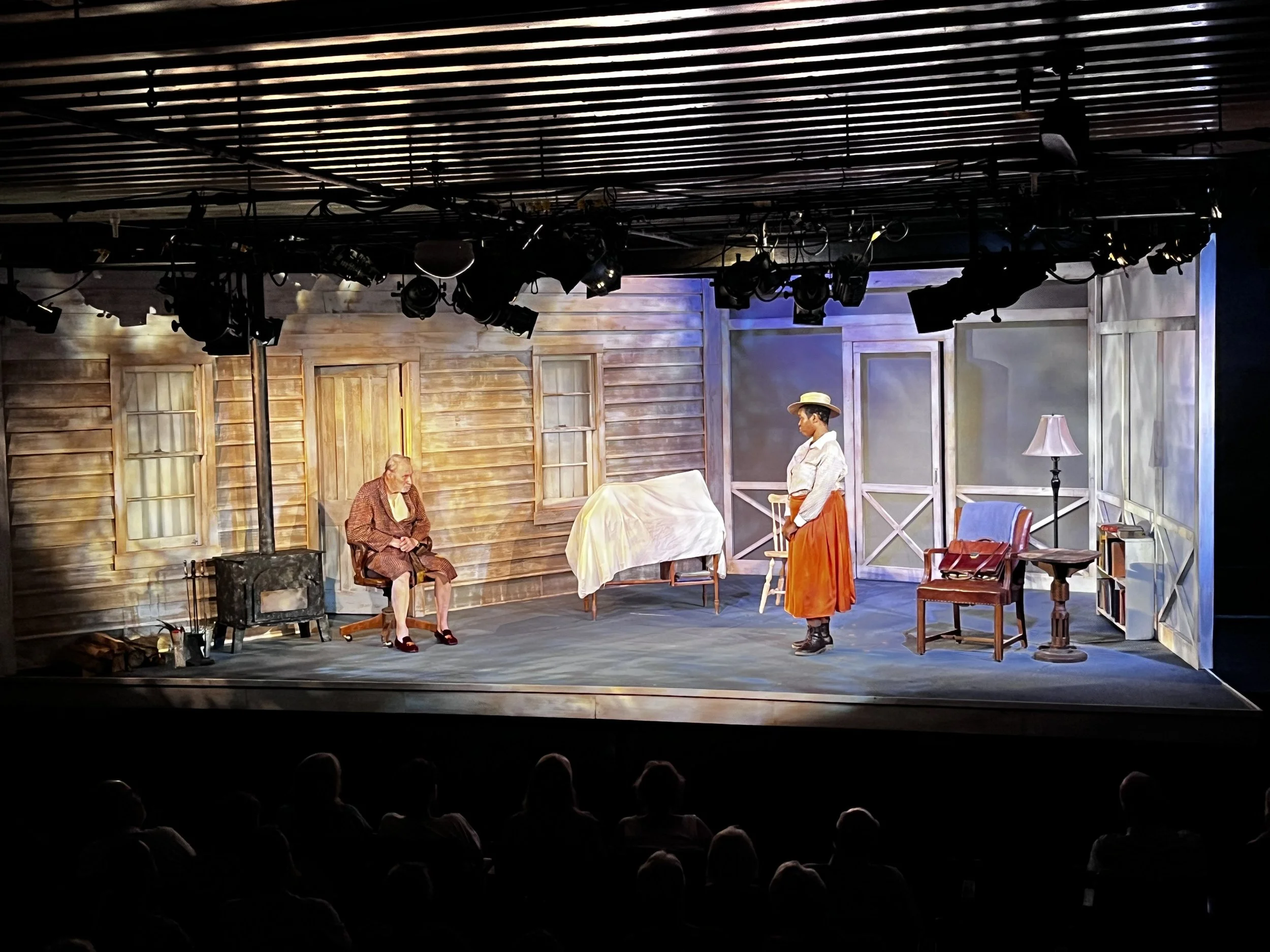
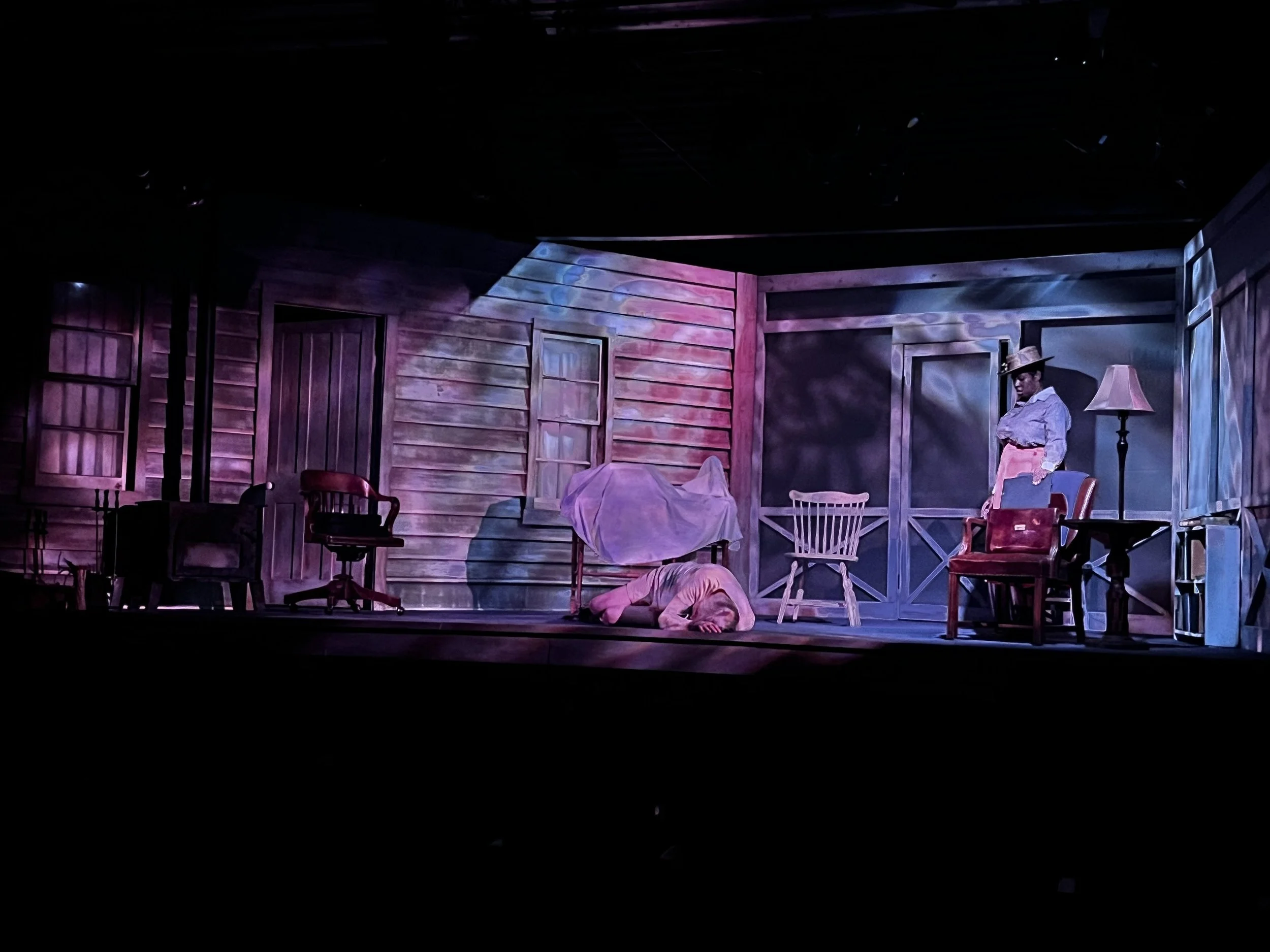
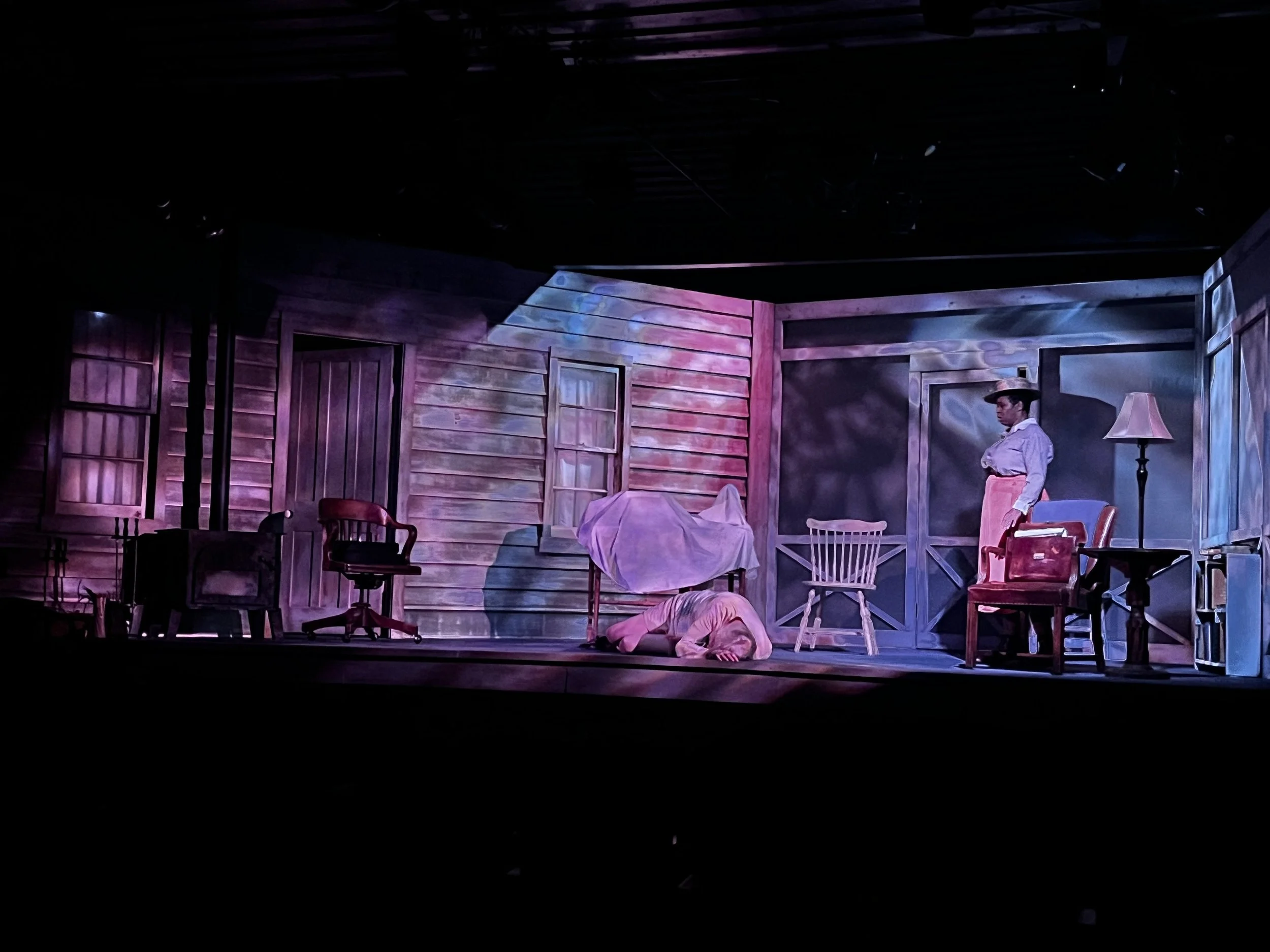
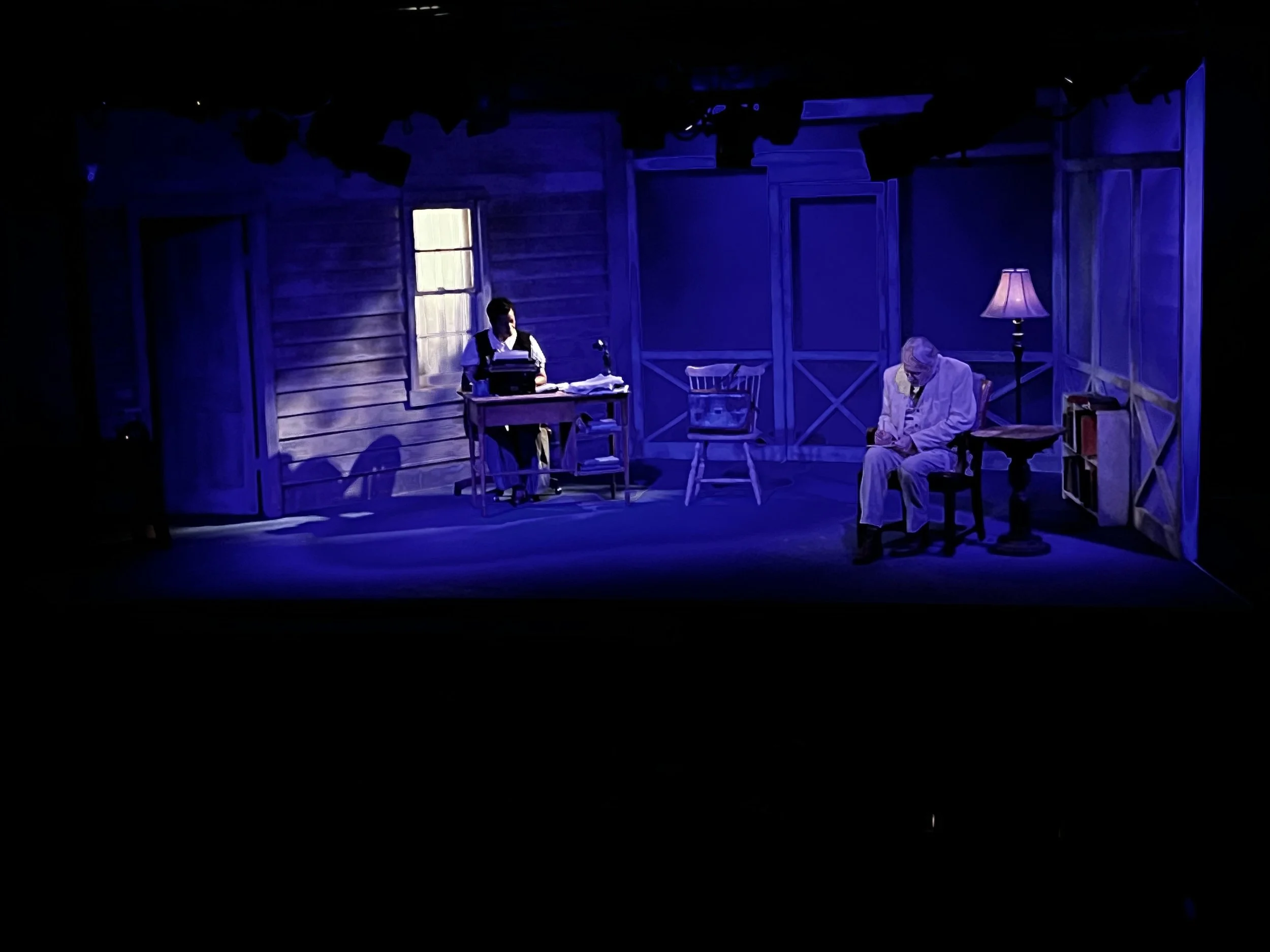
This play travels through many seasons and times of day. It was also important to heighten the moods and tensions within the story. I layered many textures and utilized color play to change the mood and follow the sun’s arc within the story.
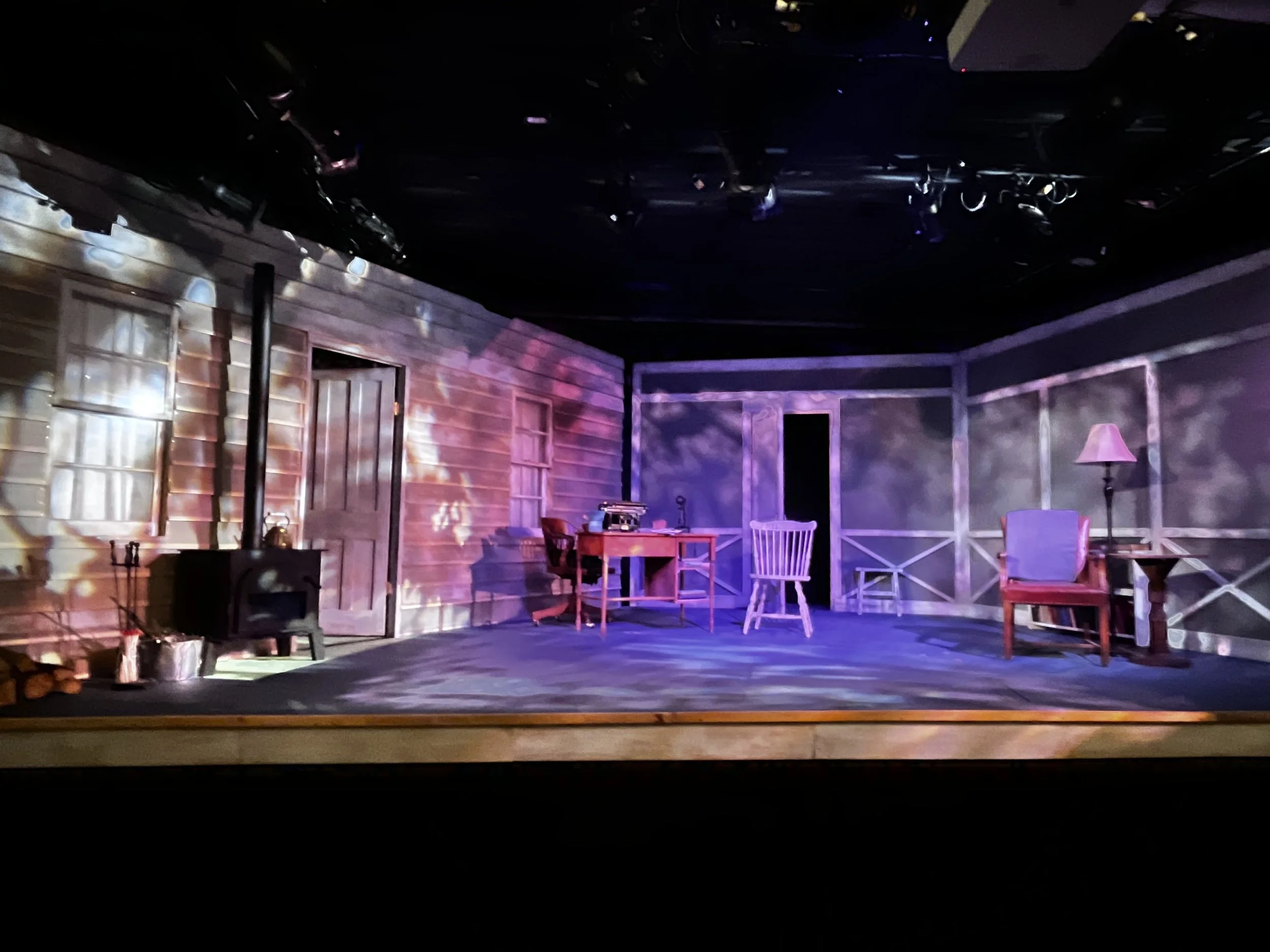
Initial Lighting test with color
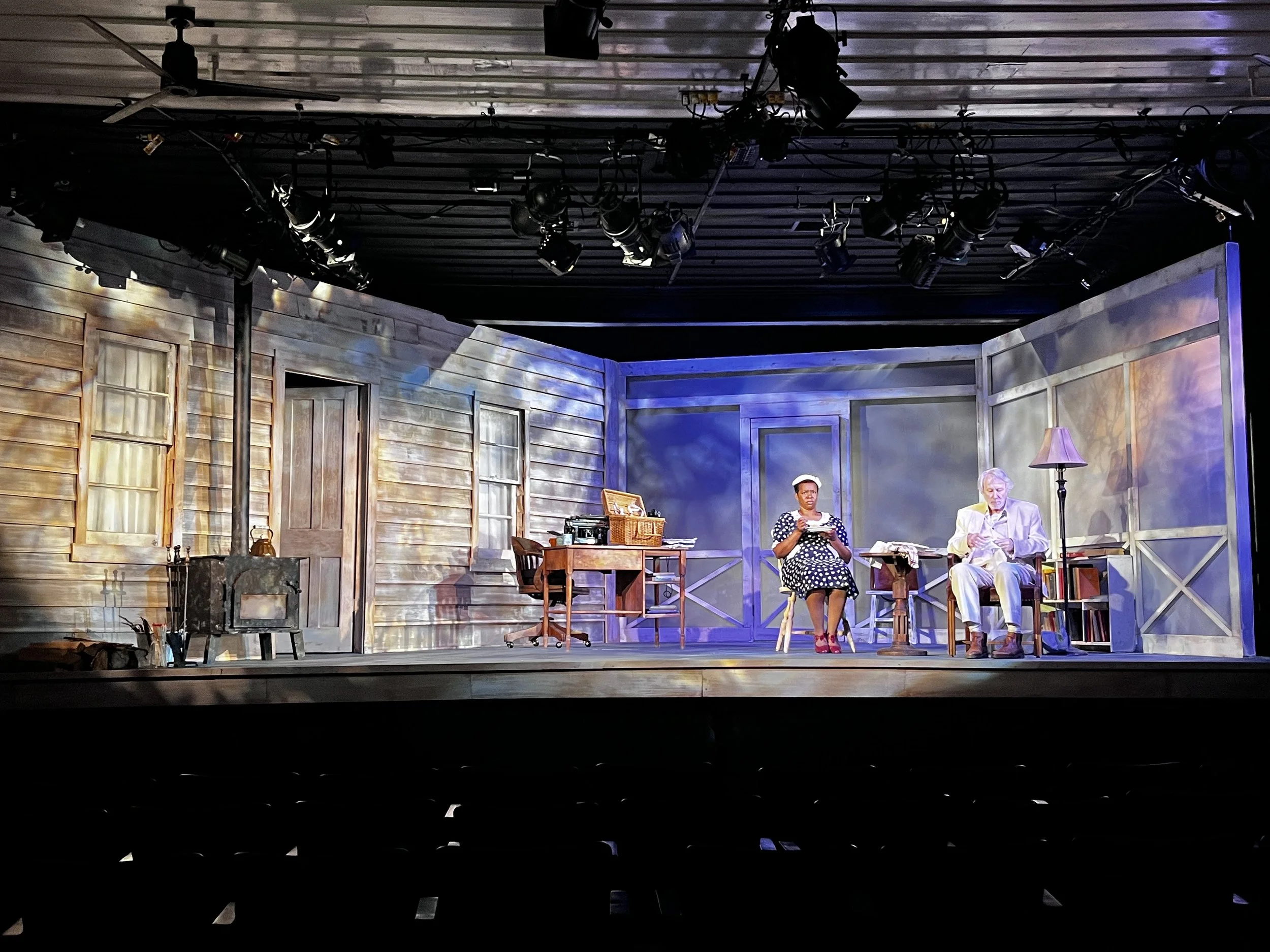
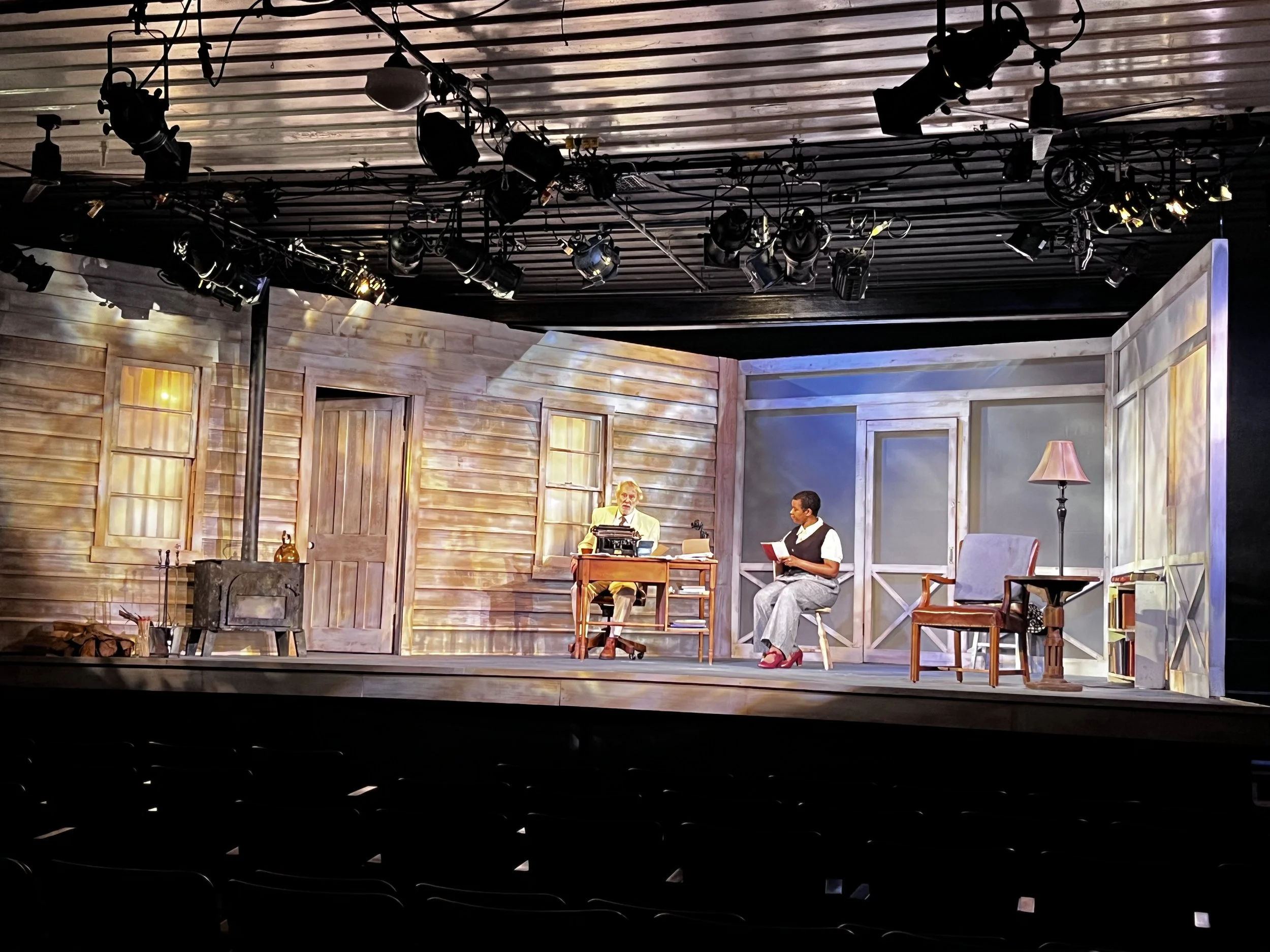
Blessah and Silas share a meal.
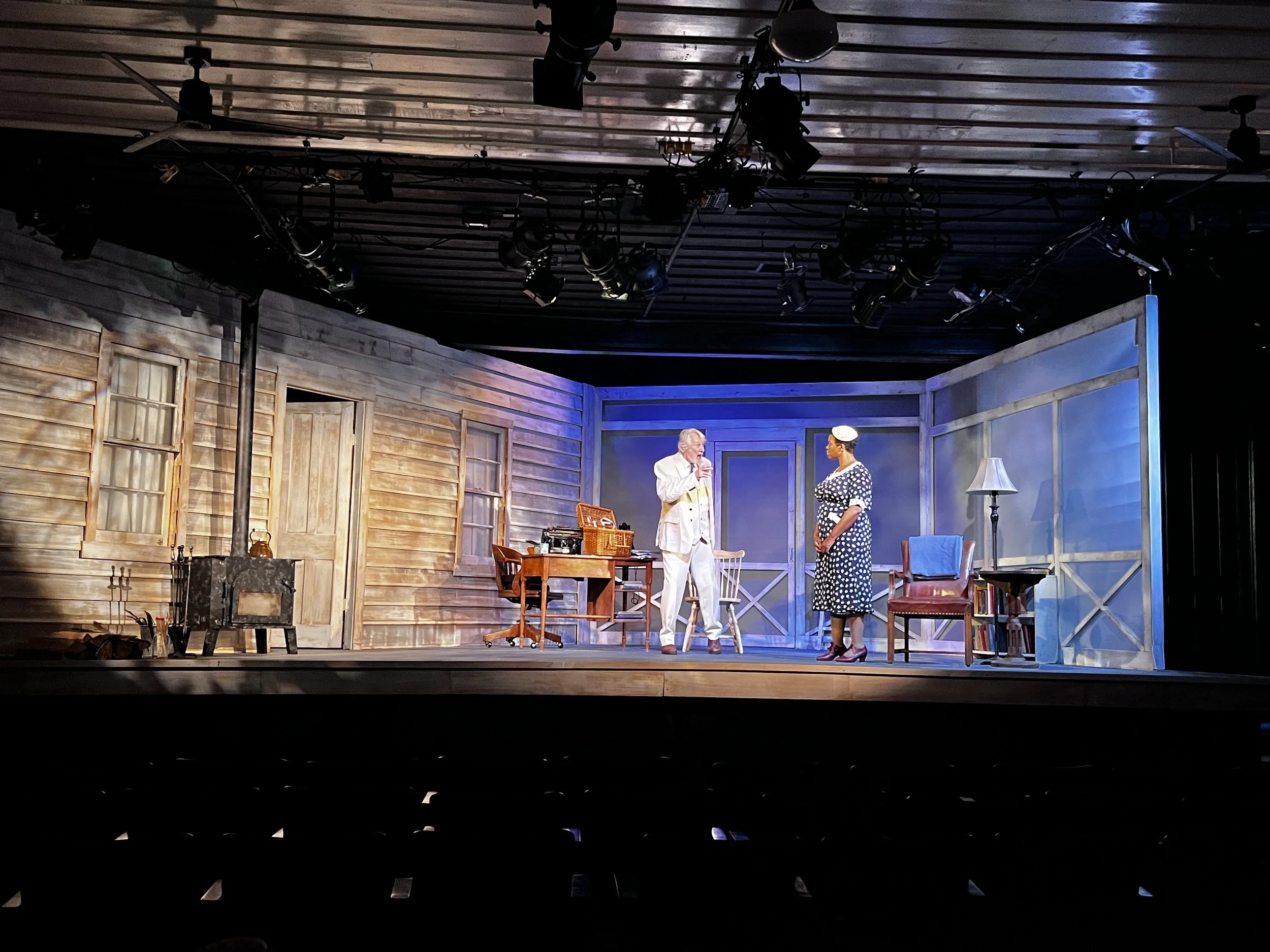
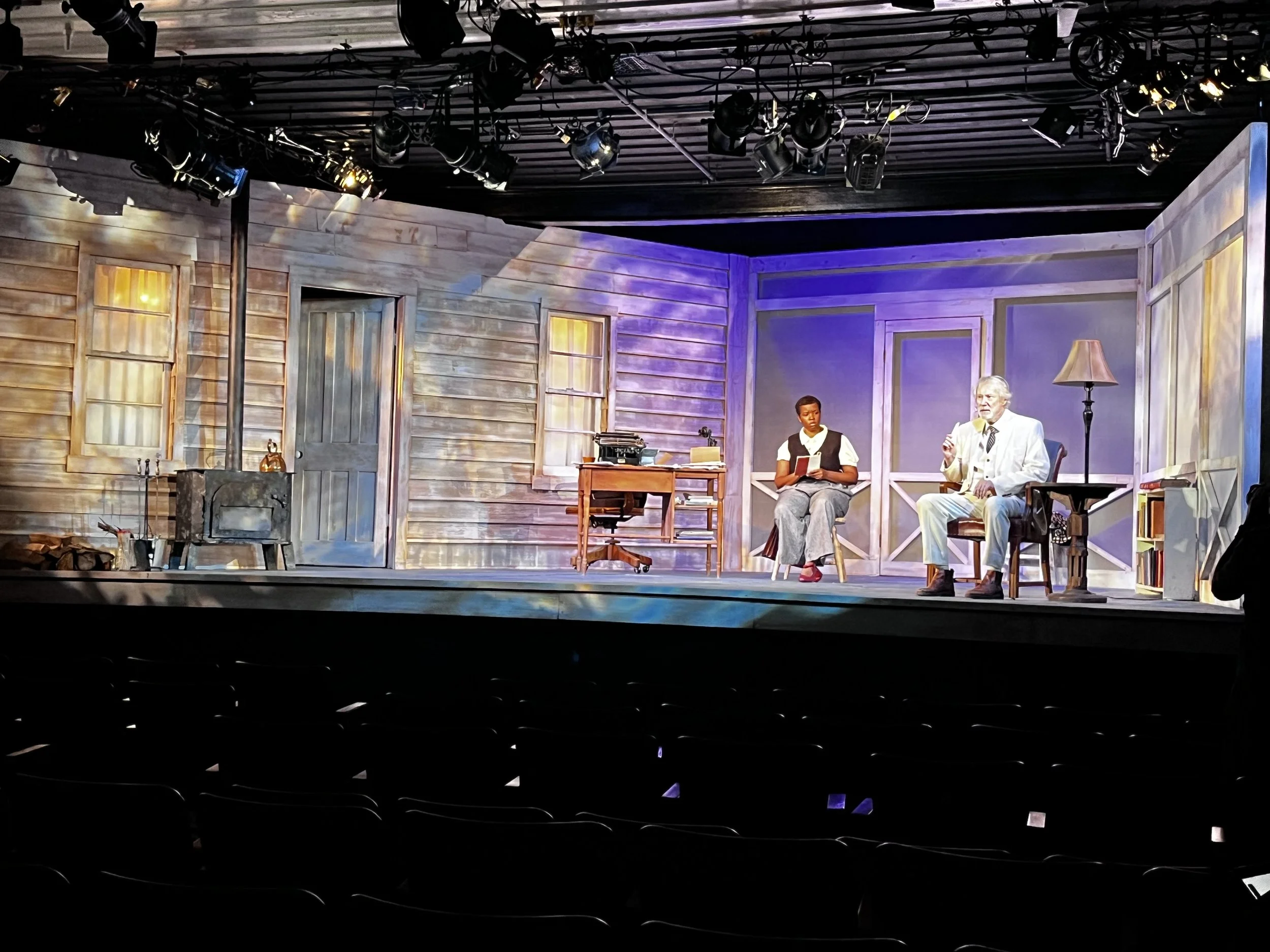
One of the great challenges in lighting design is not only balancing costume colors but balancing skin tones. I had to chase that white suit around the stage.
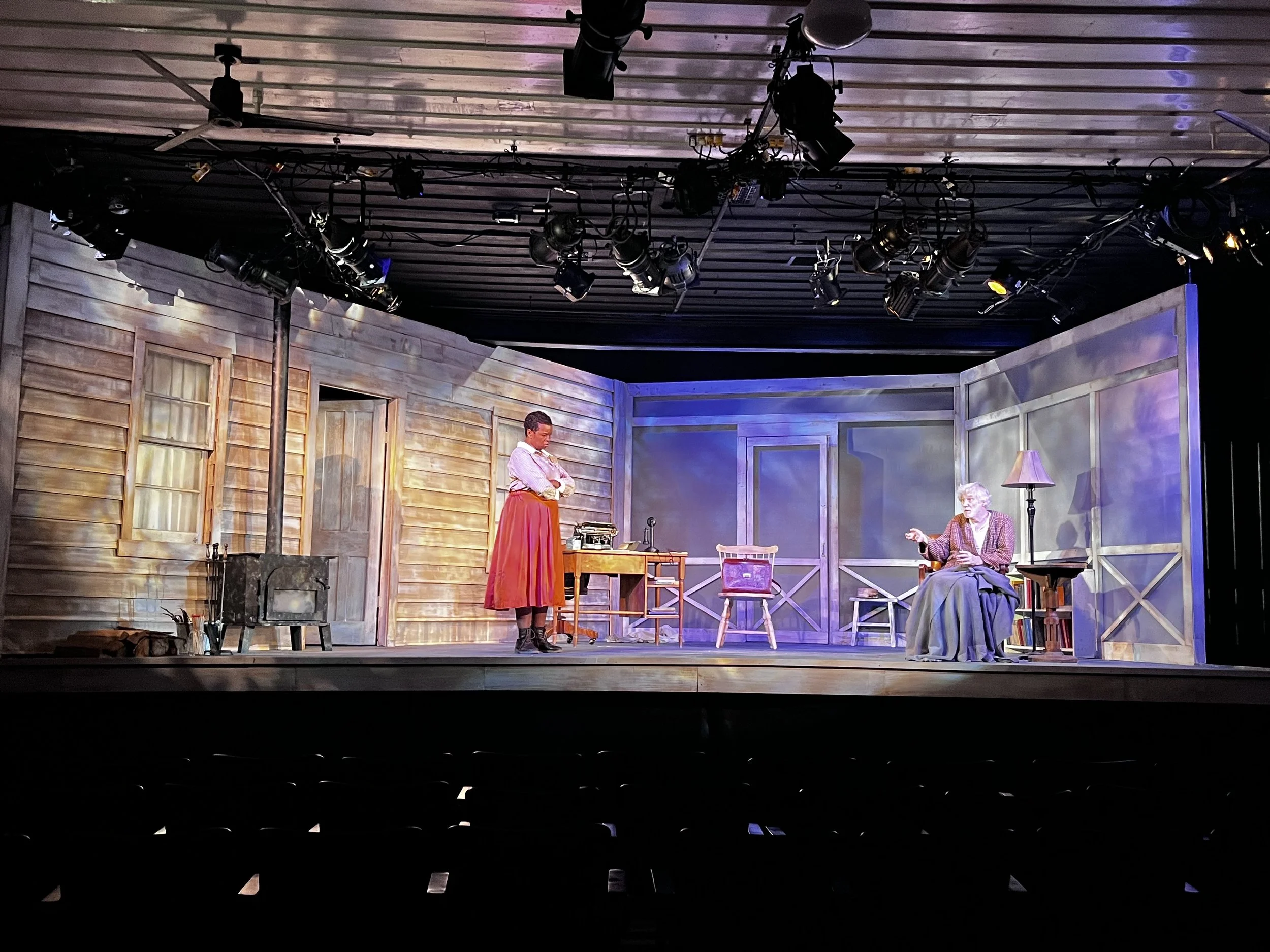
One of the many challenges on this show was balancing skin tones. African American or black skin tones take beautifully to added color. I had to balance that with Silas's pale tones.
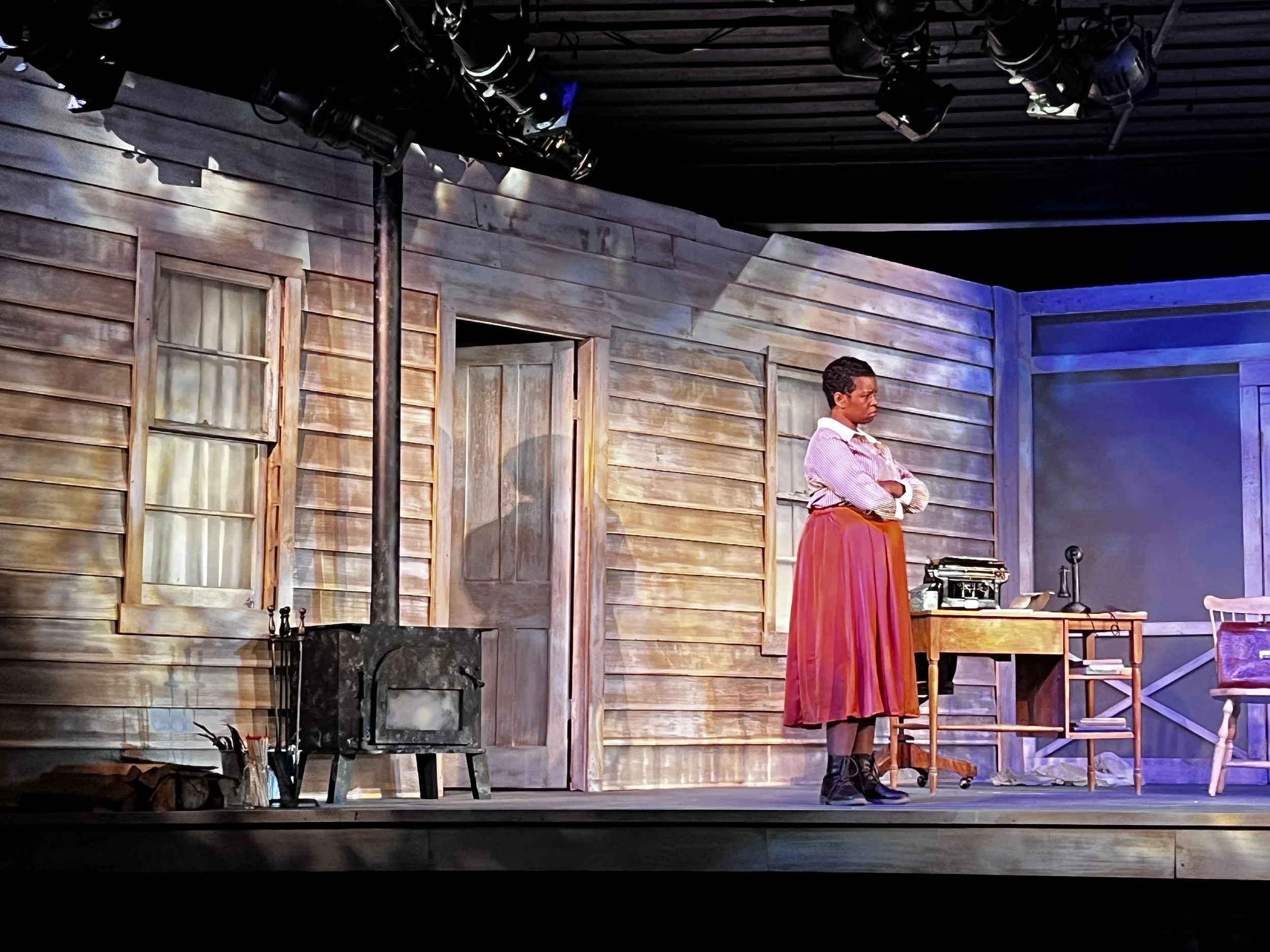
One of the many challenges on this show was balancing skin tones. African American or black skin tones take beautifully to added color.
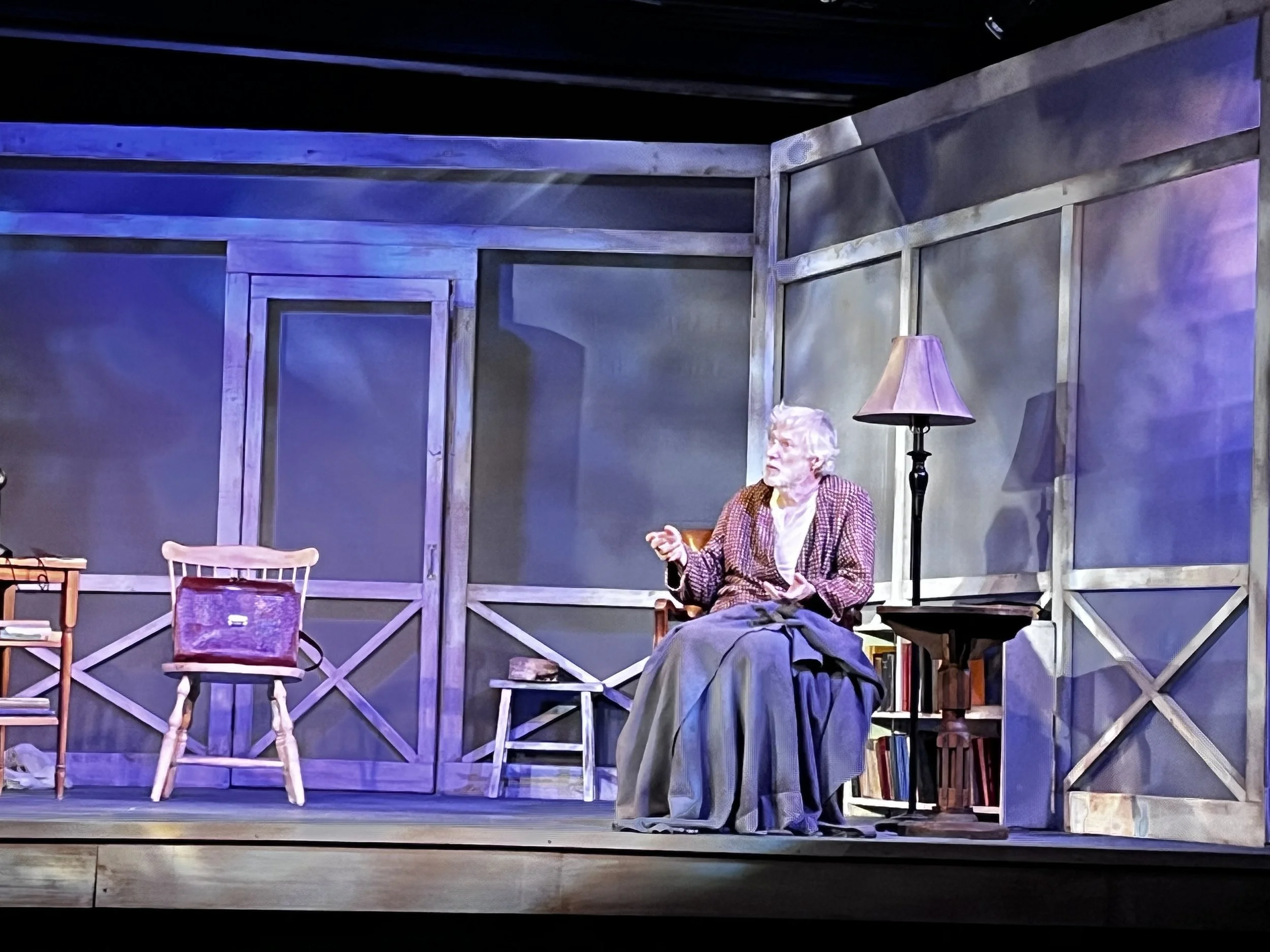
The screen for the porch took light beautifully and allowed me to layer textures and color
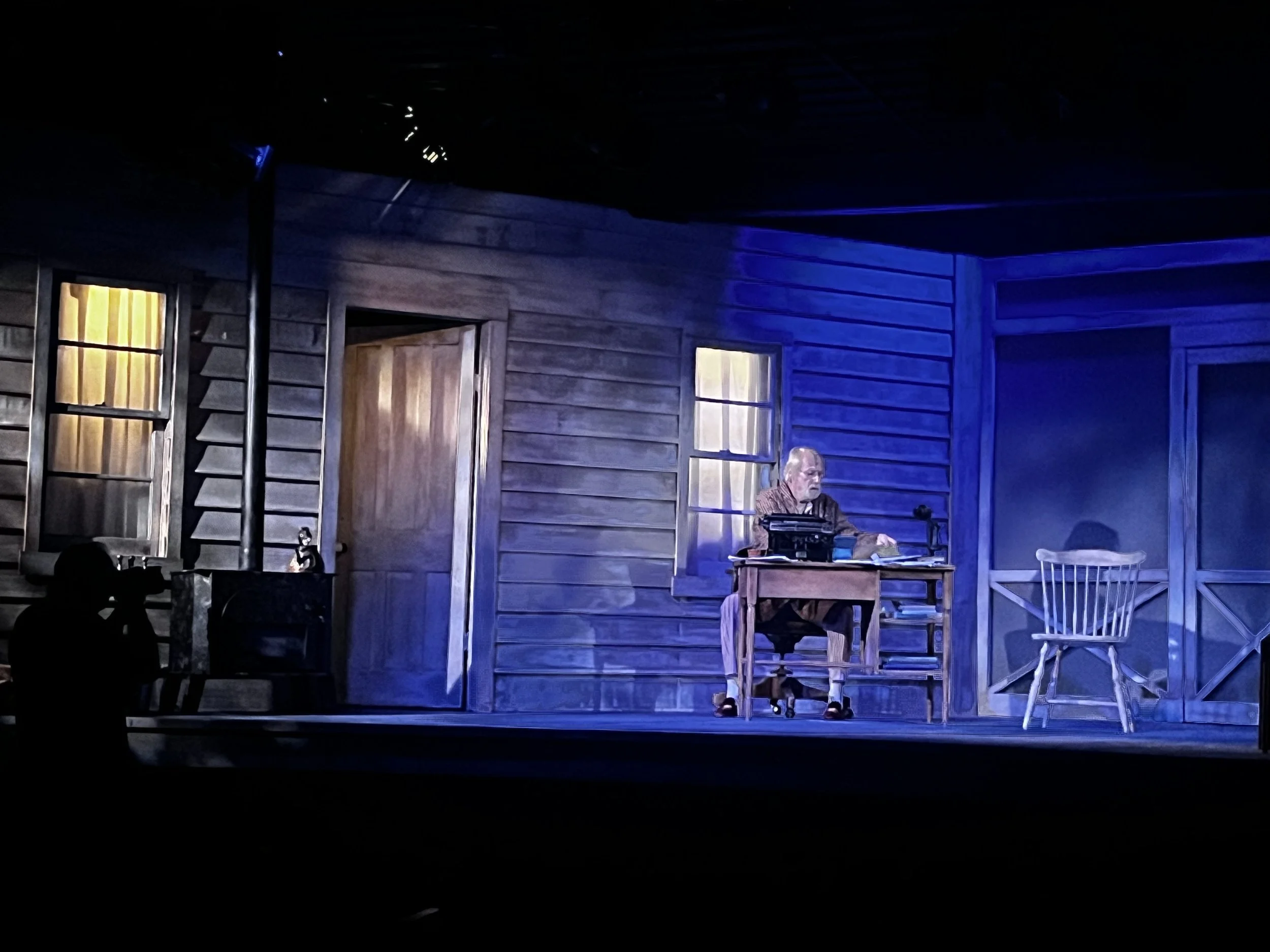
alone, writing at night
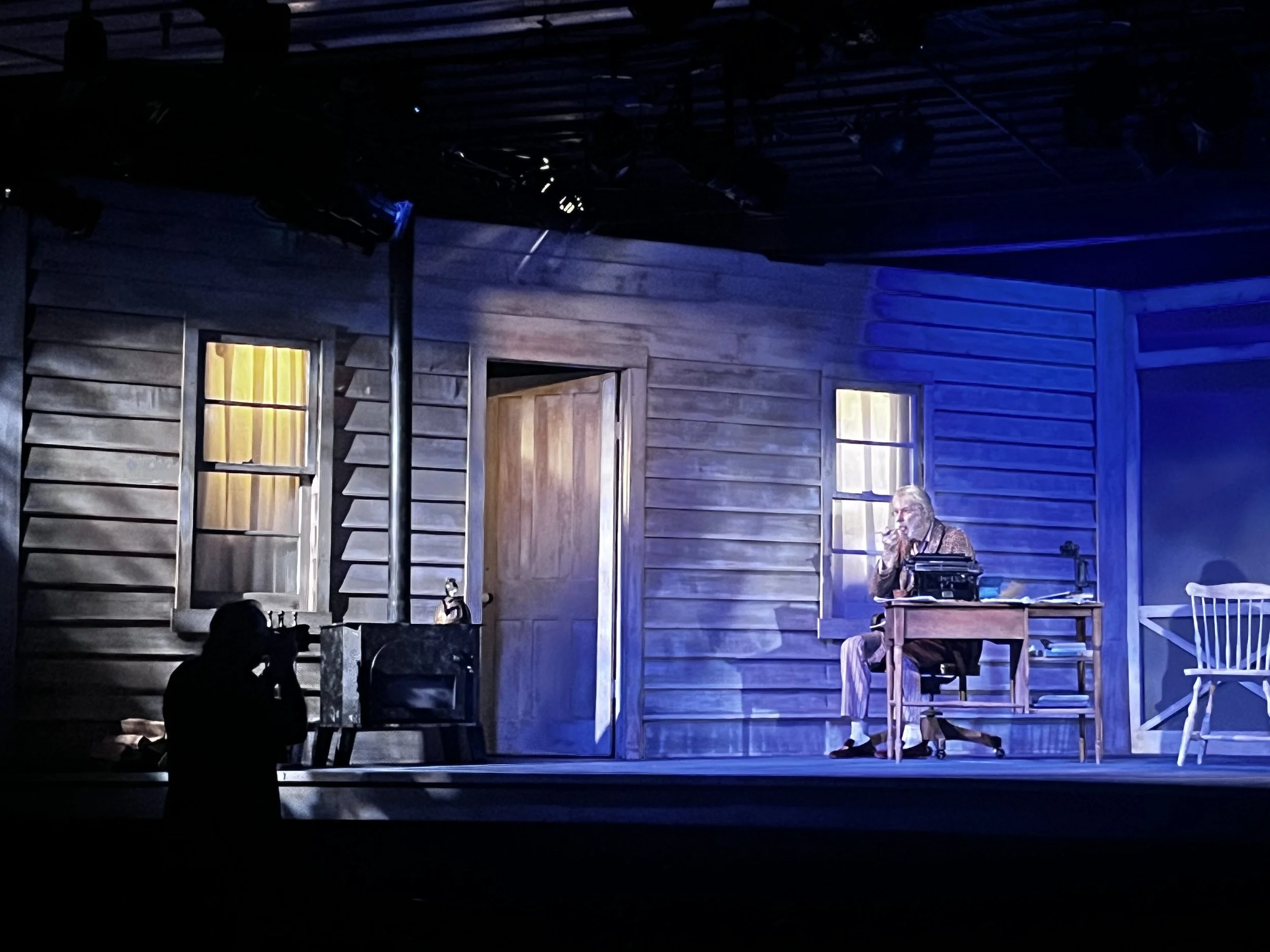
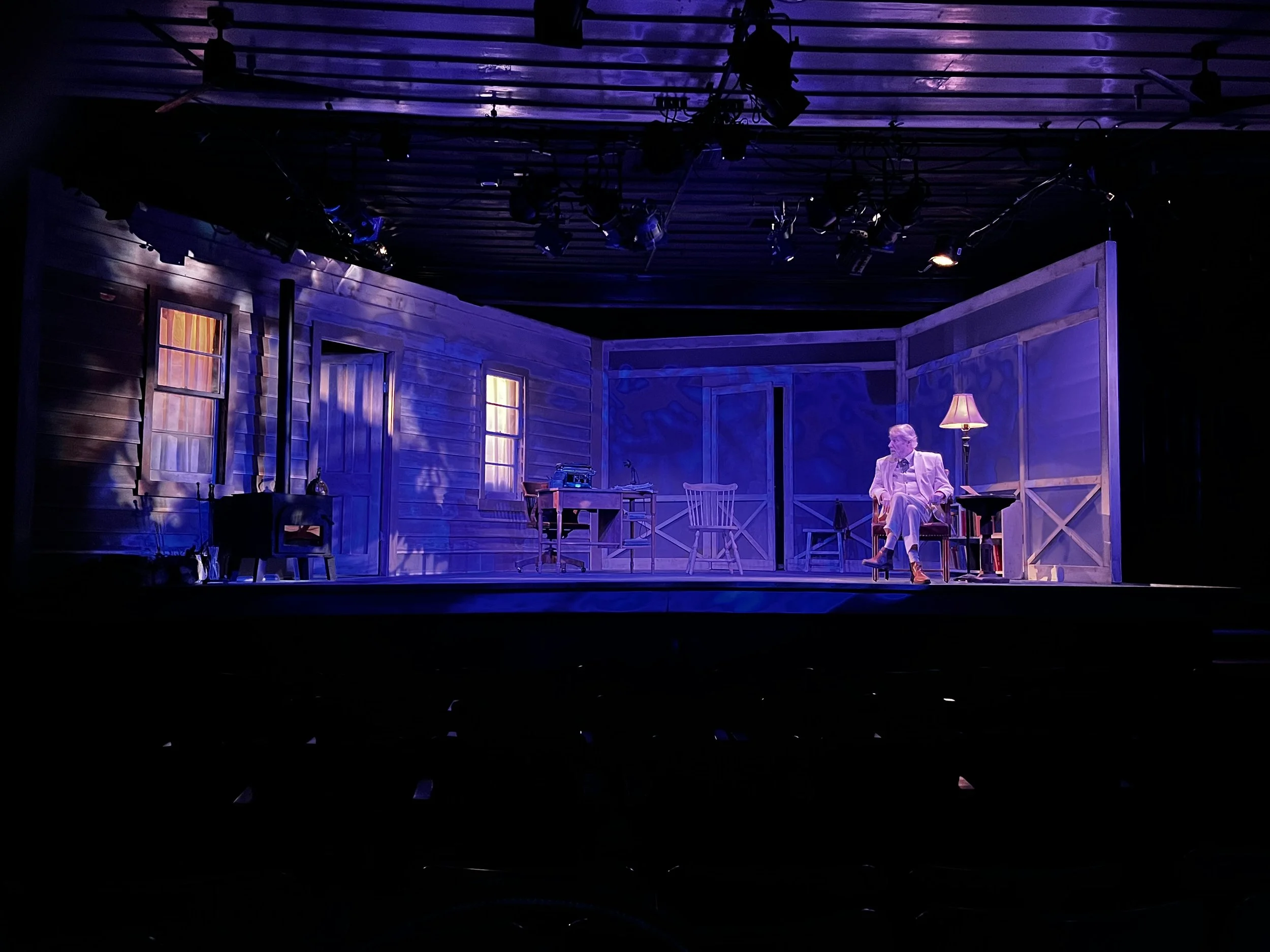
End of play. Silas began to write again
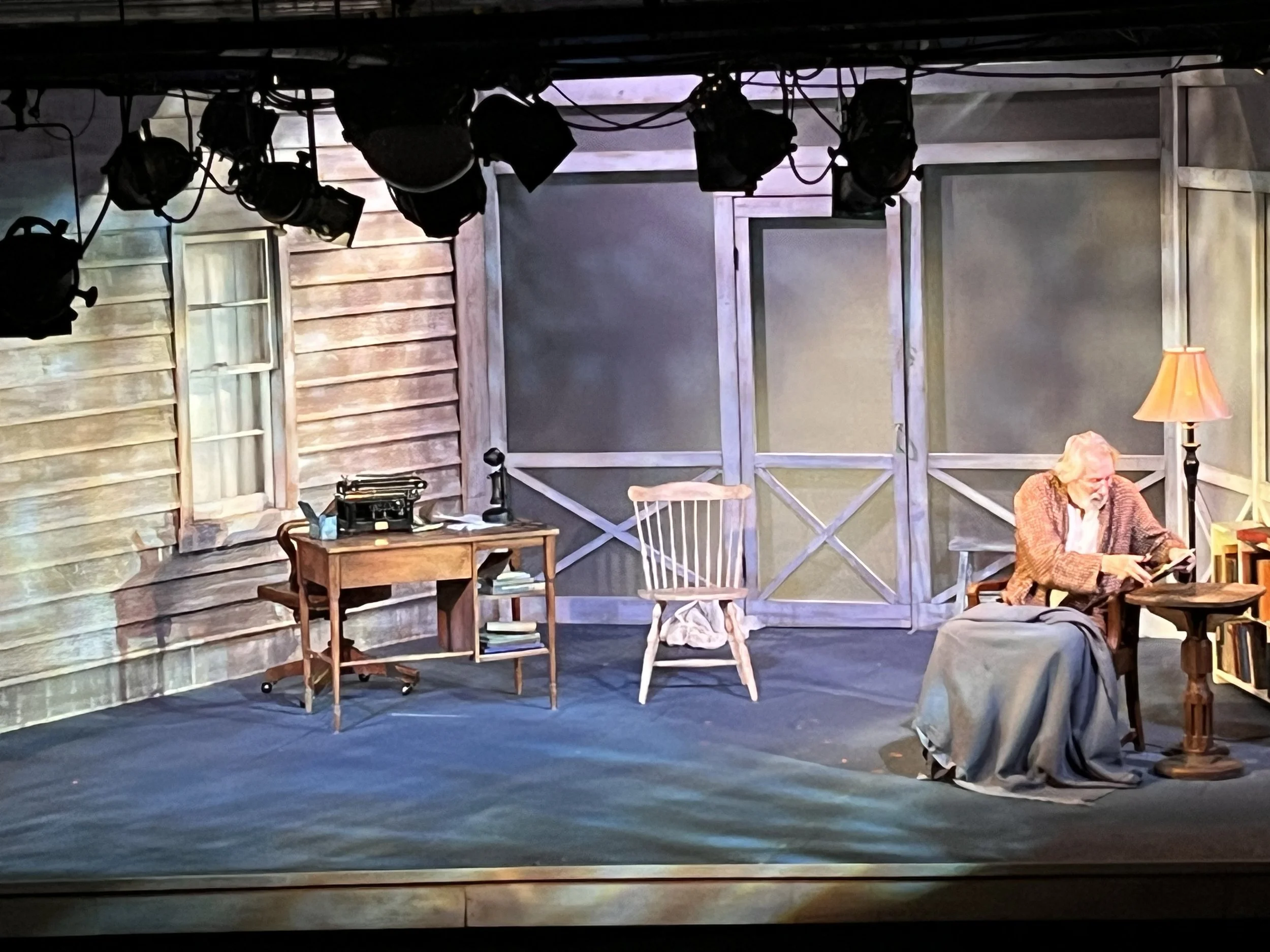
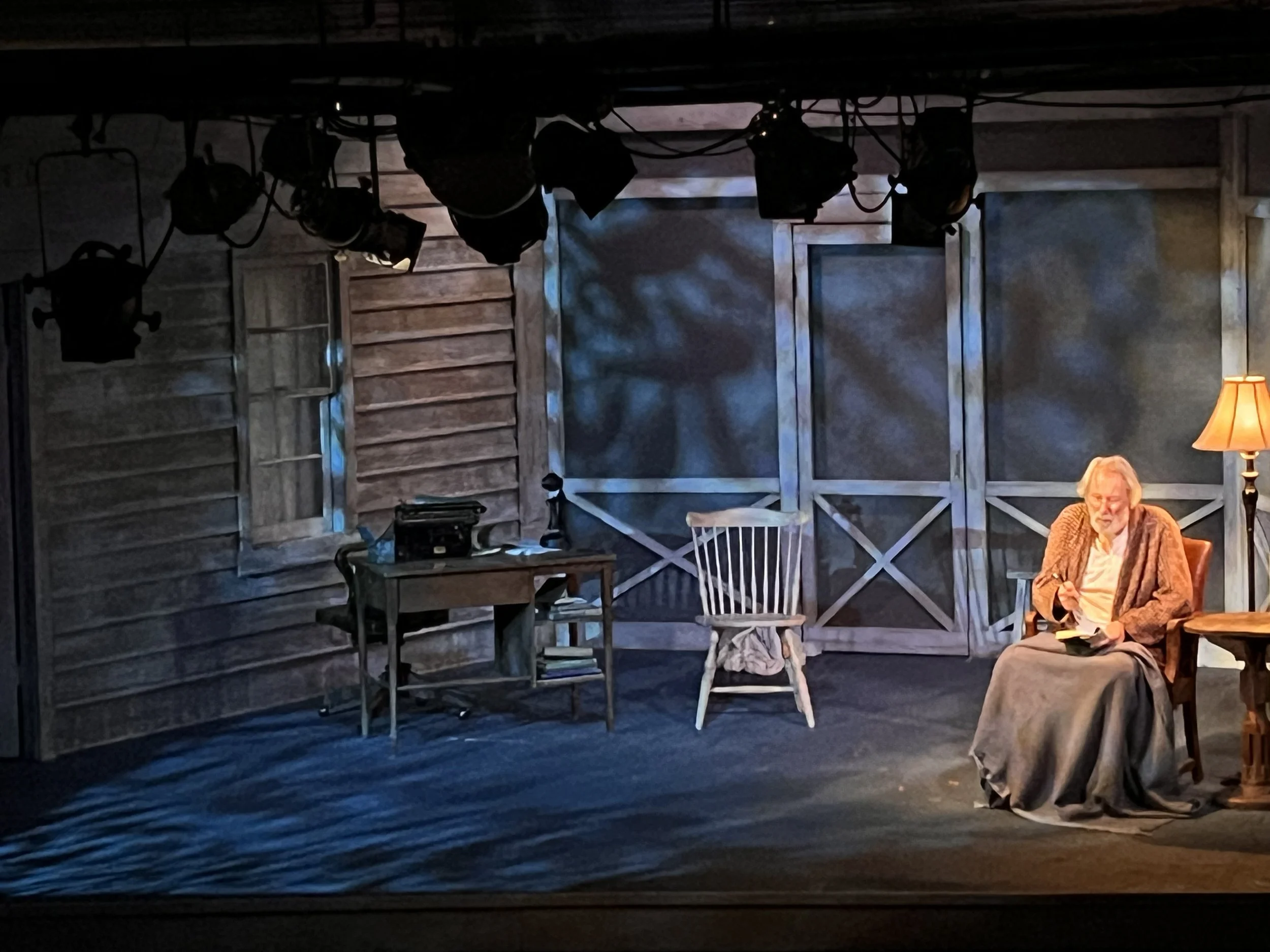
End of play, Silas begins to write again
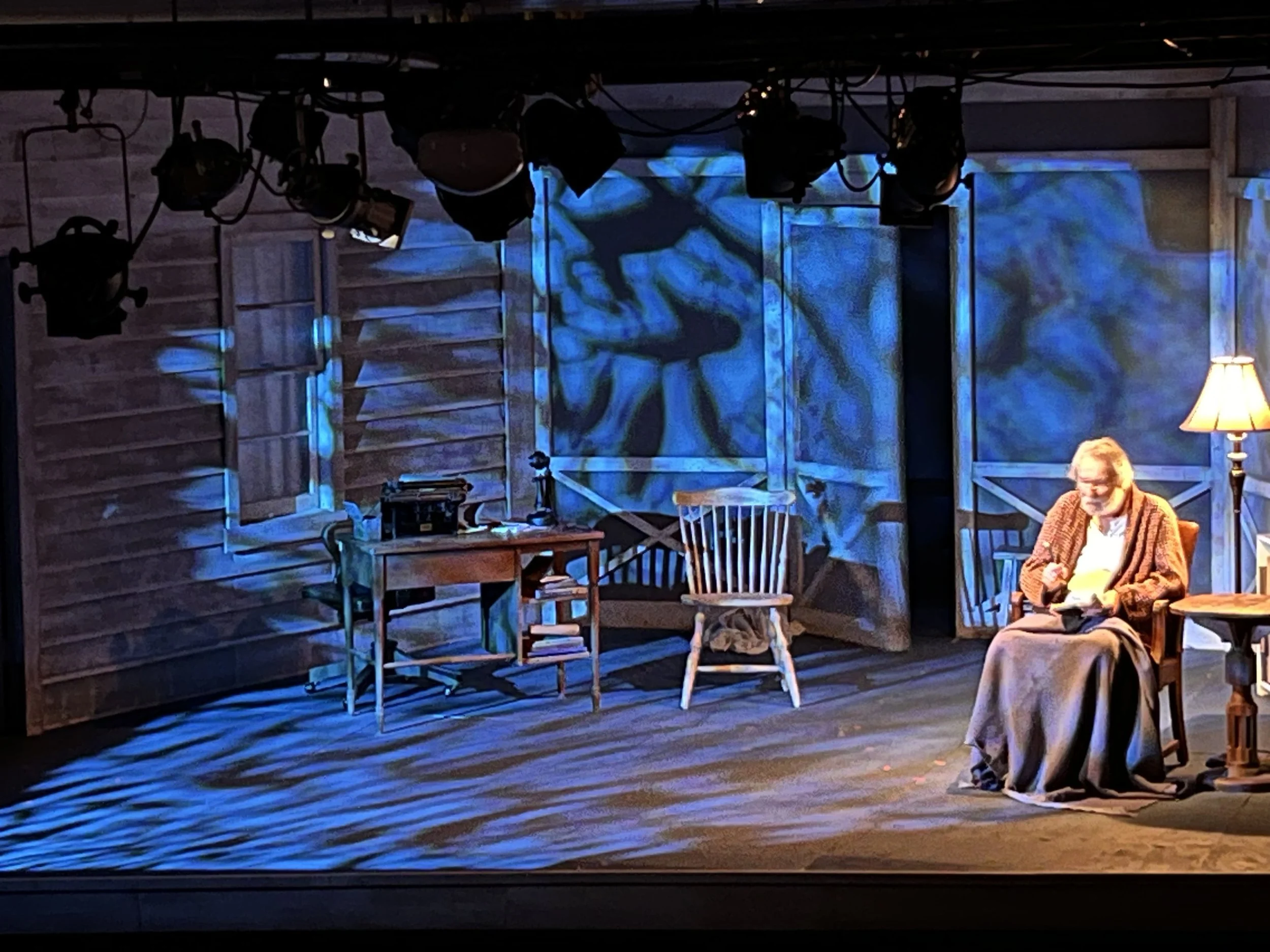
End of play, a ghost or memory opens the door.
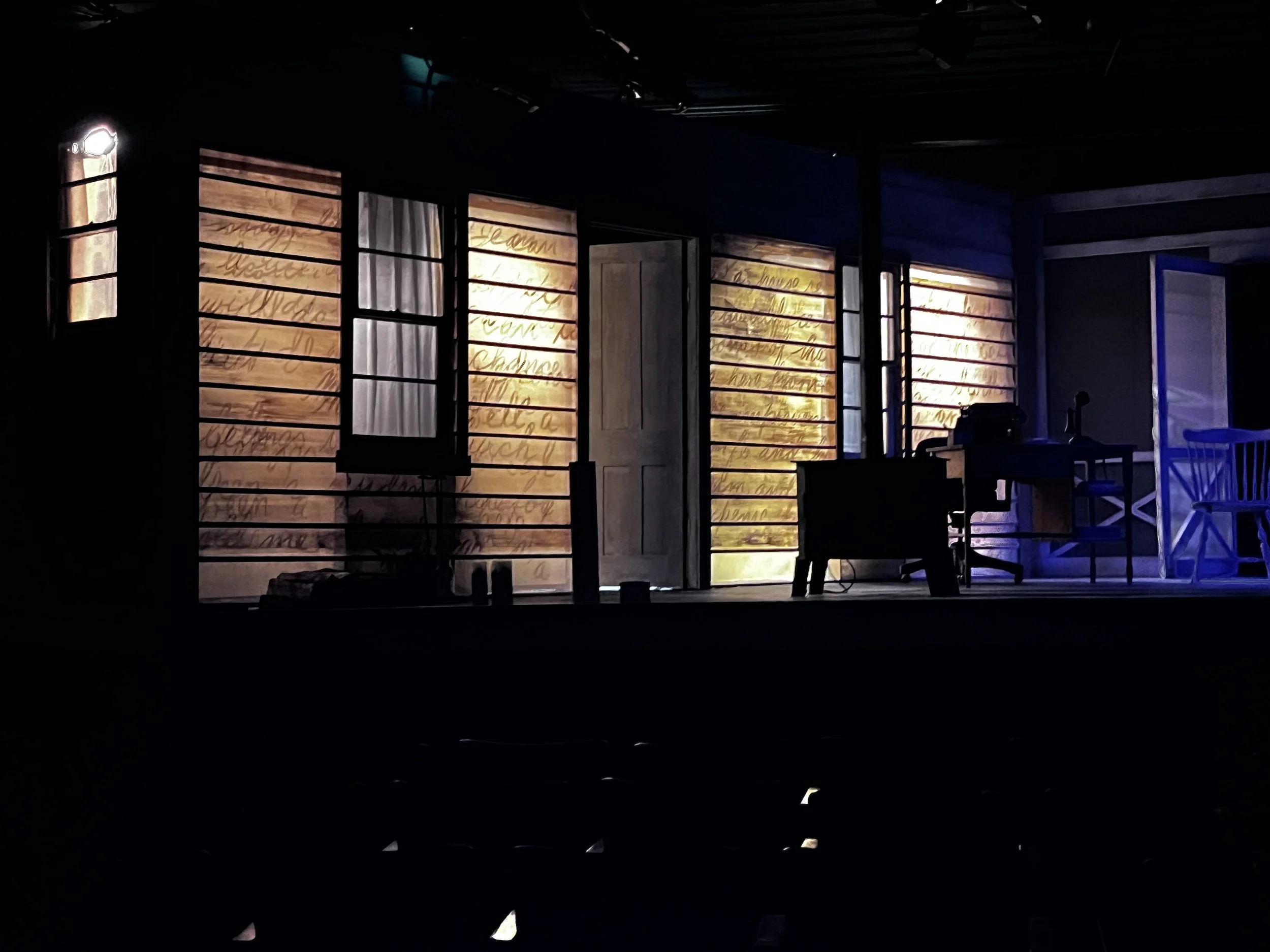
I created translucent walls. My early concept was that the house of his writing porch has absorbed his words
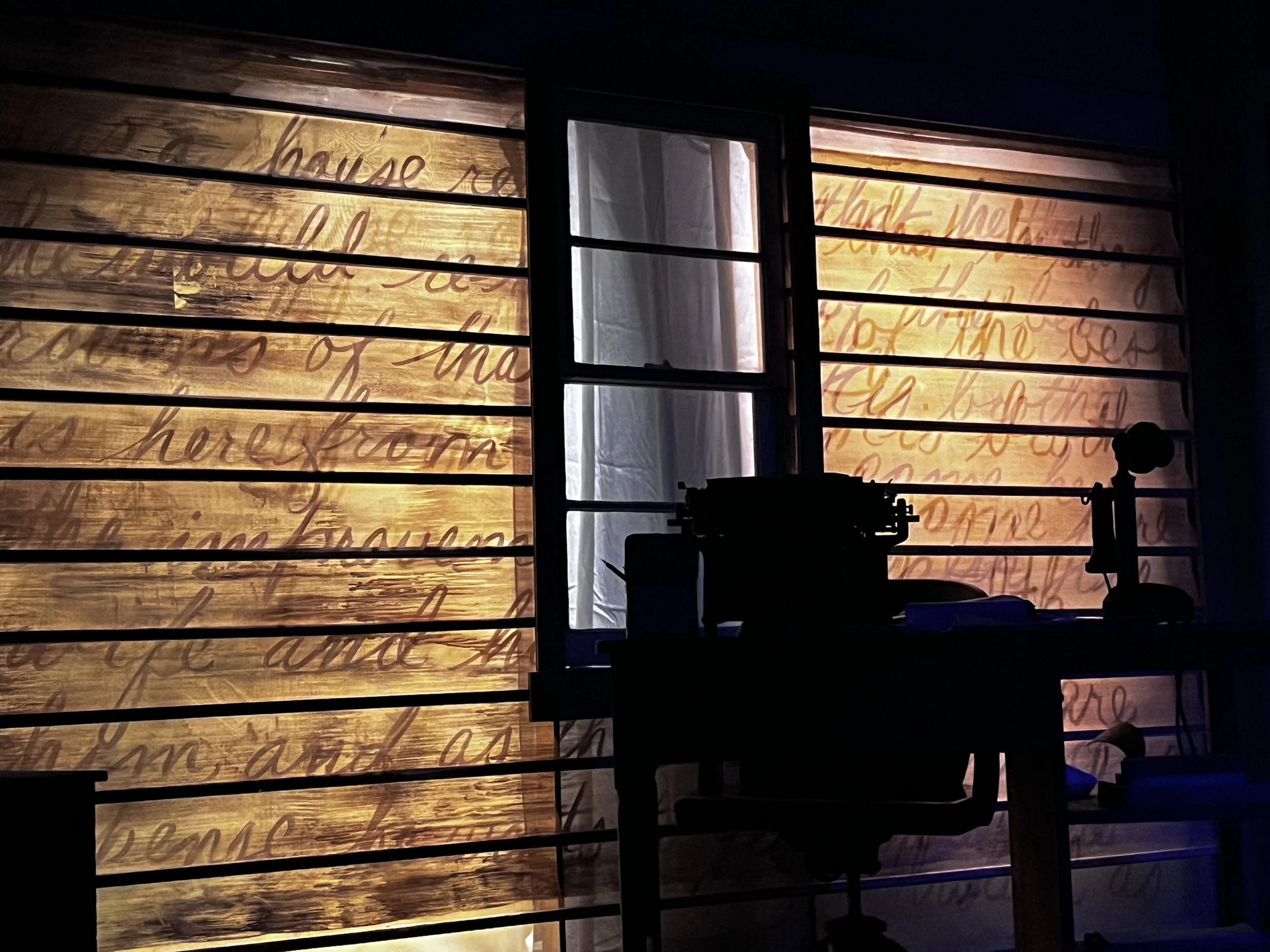
A nice, serendipitous effect was discovered. t he shadows of the text wall formed a double printing on the clapboard walls
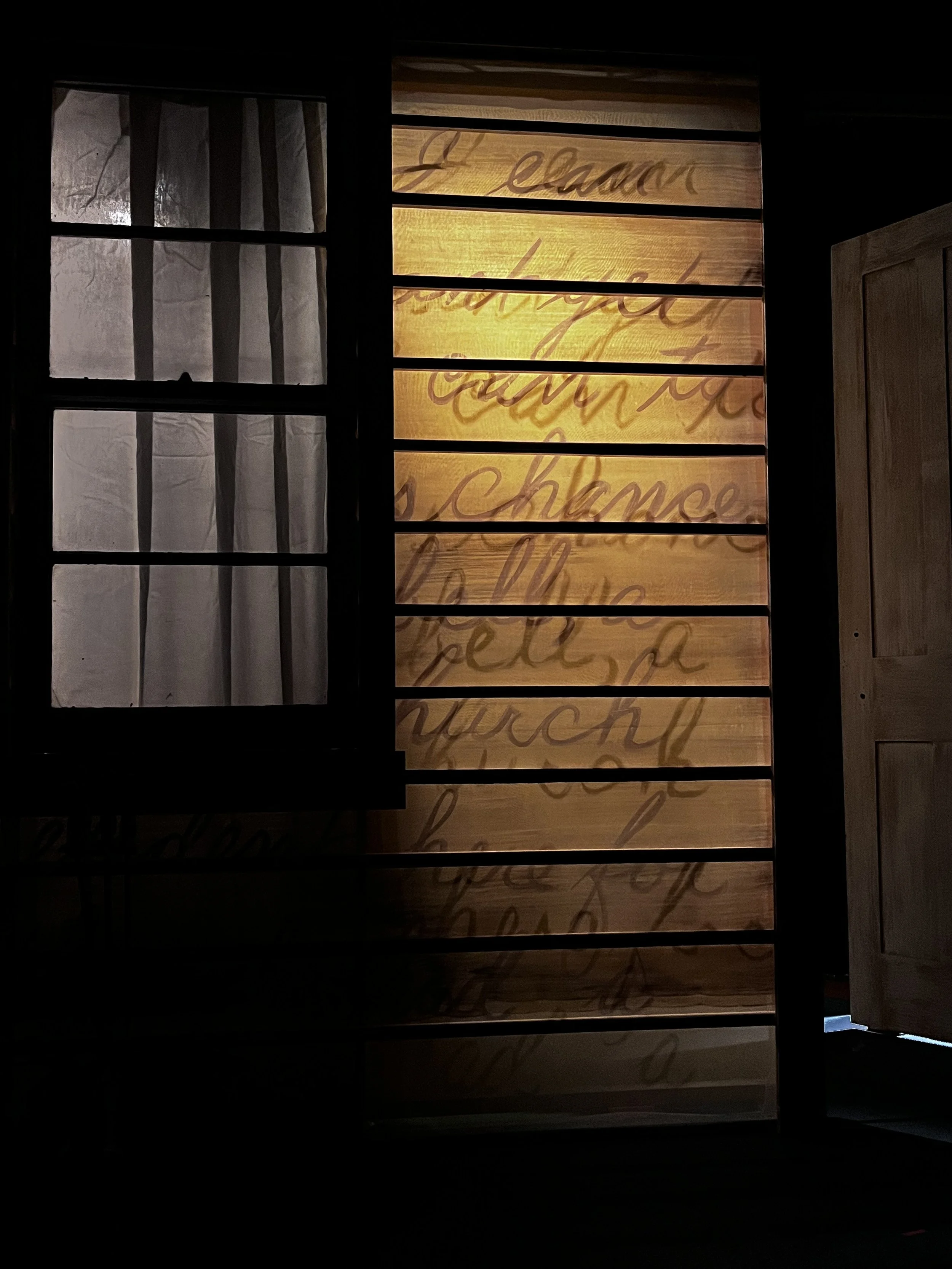
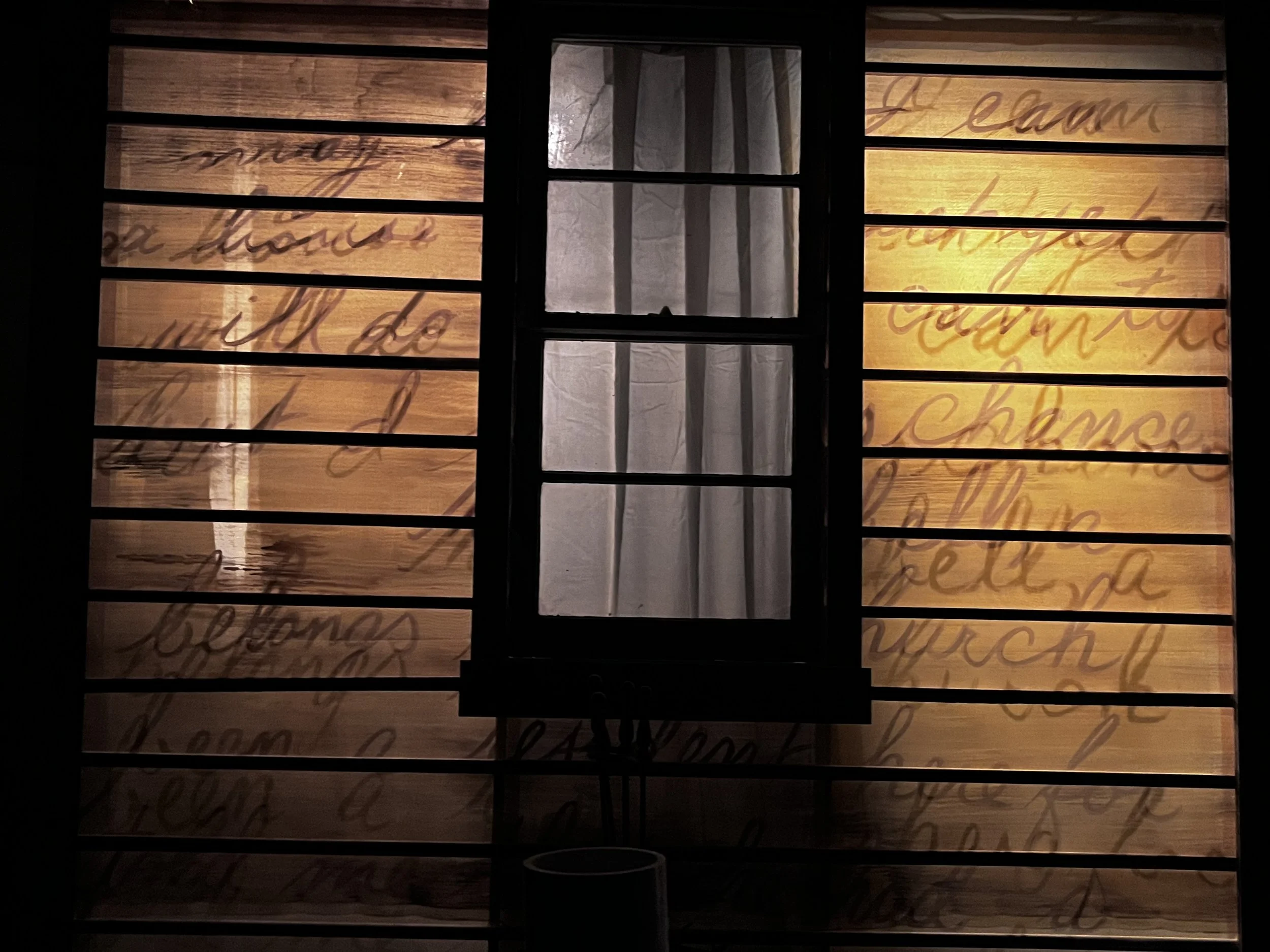
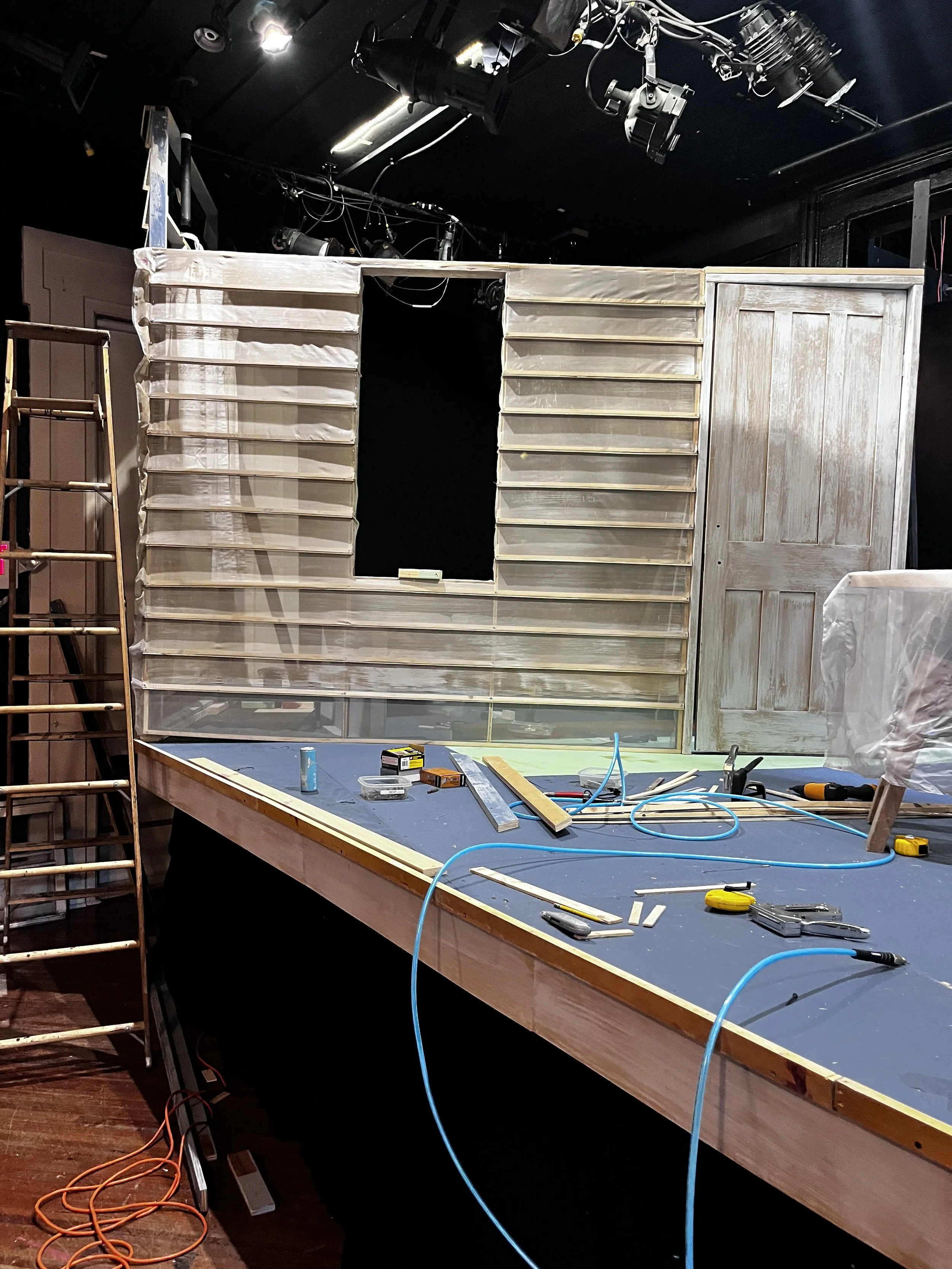
Load-in and construction. The onstage clapboards were made of translucent material.
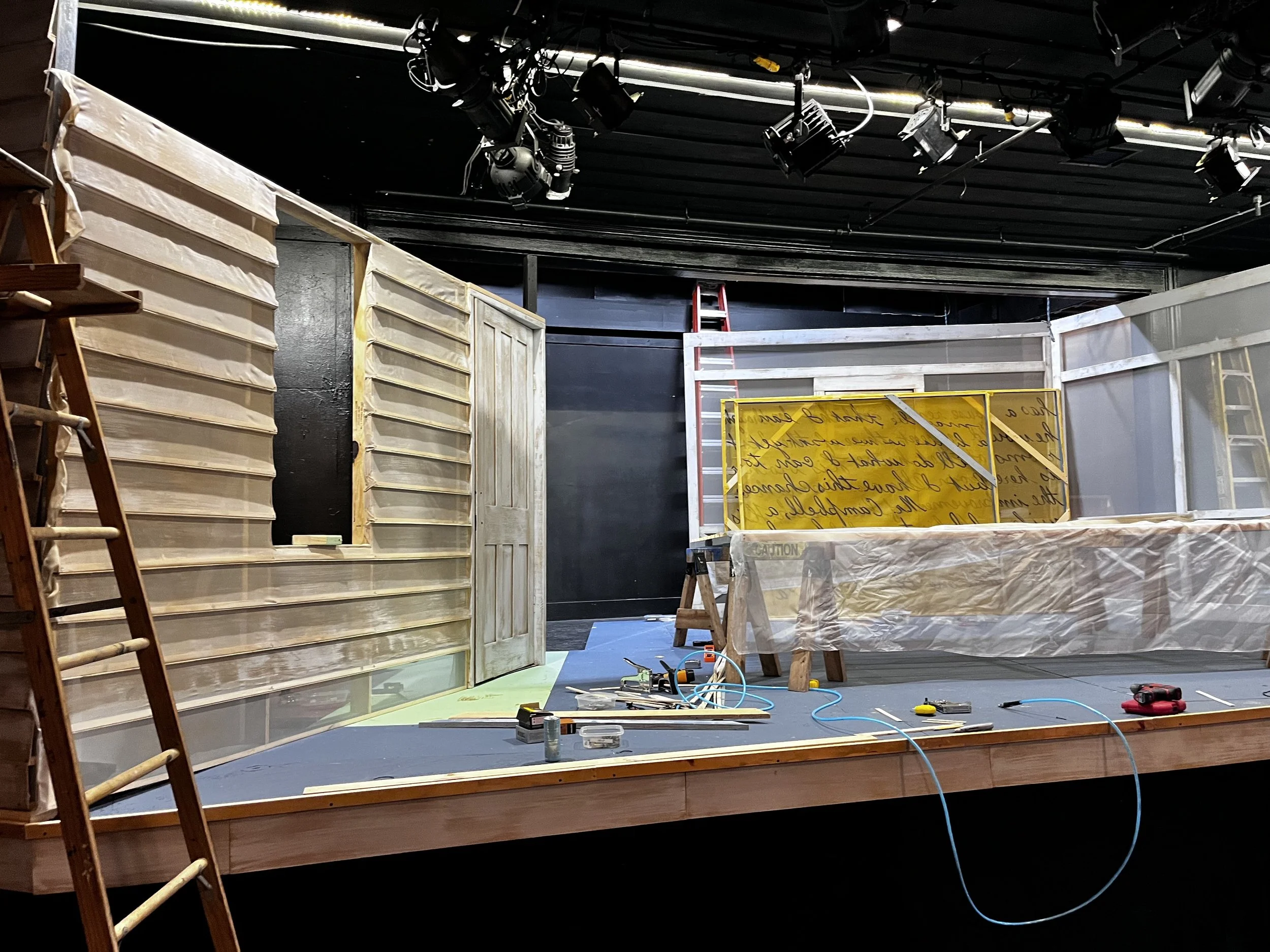
Upstage you ca see one of the text walls. The gold color came from the fabric and the light.
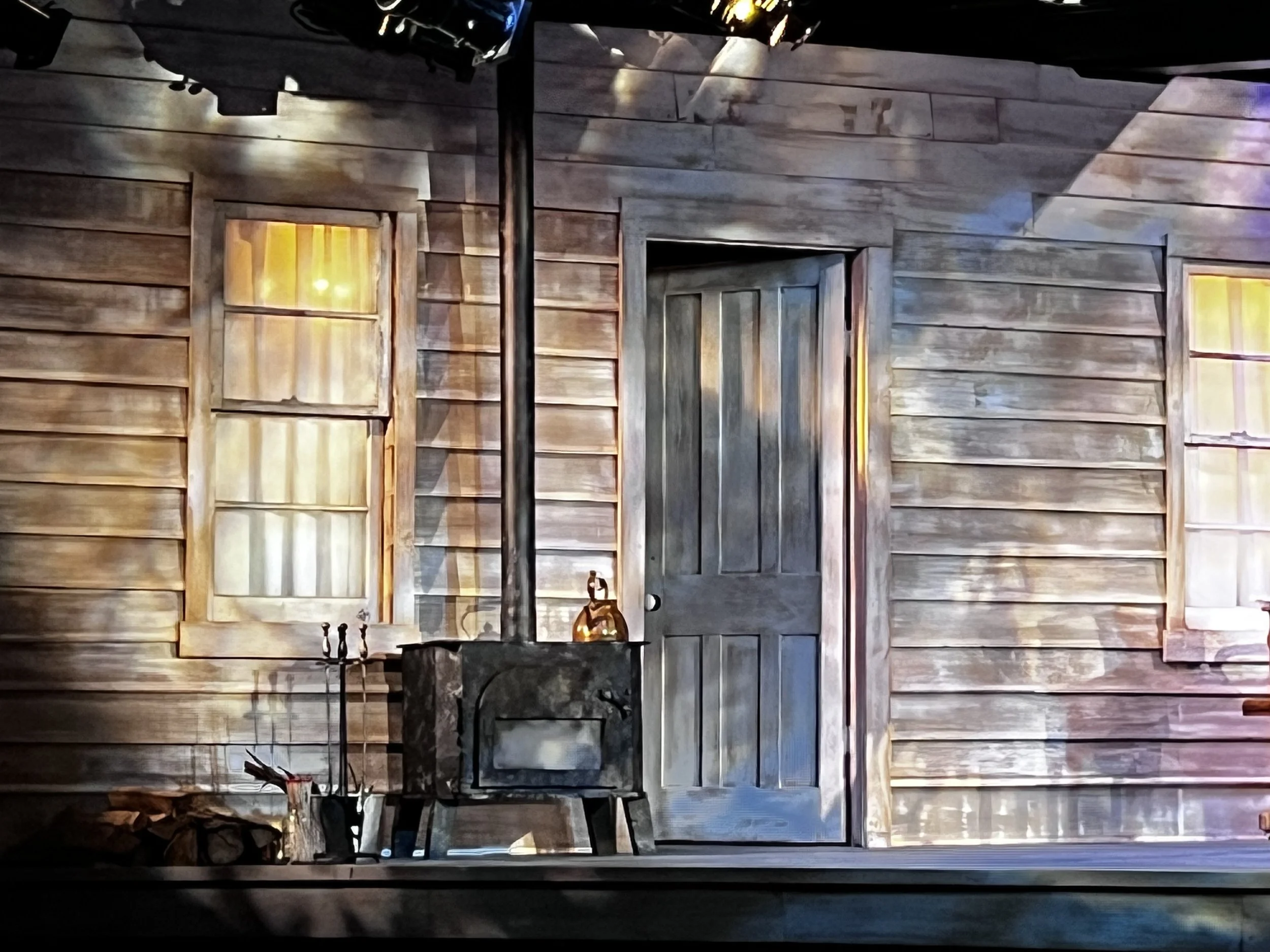
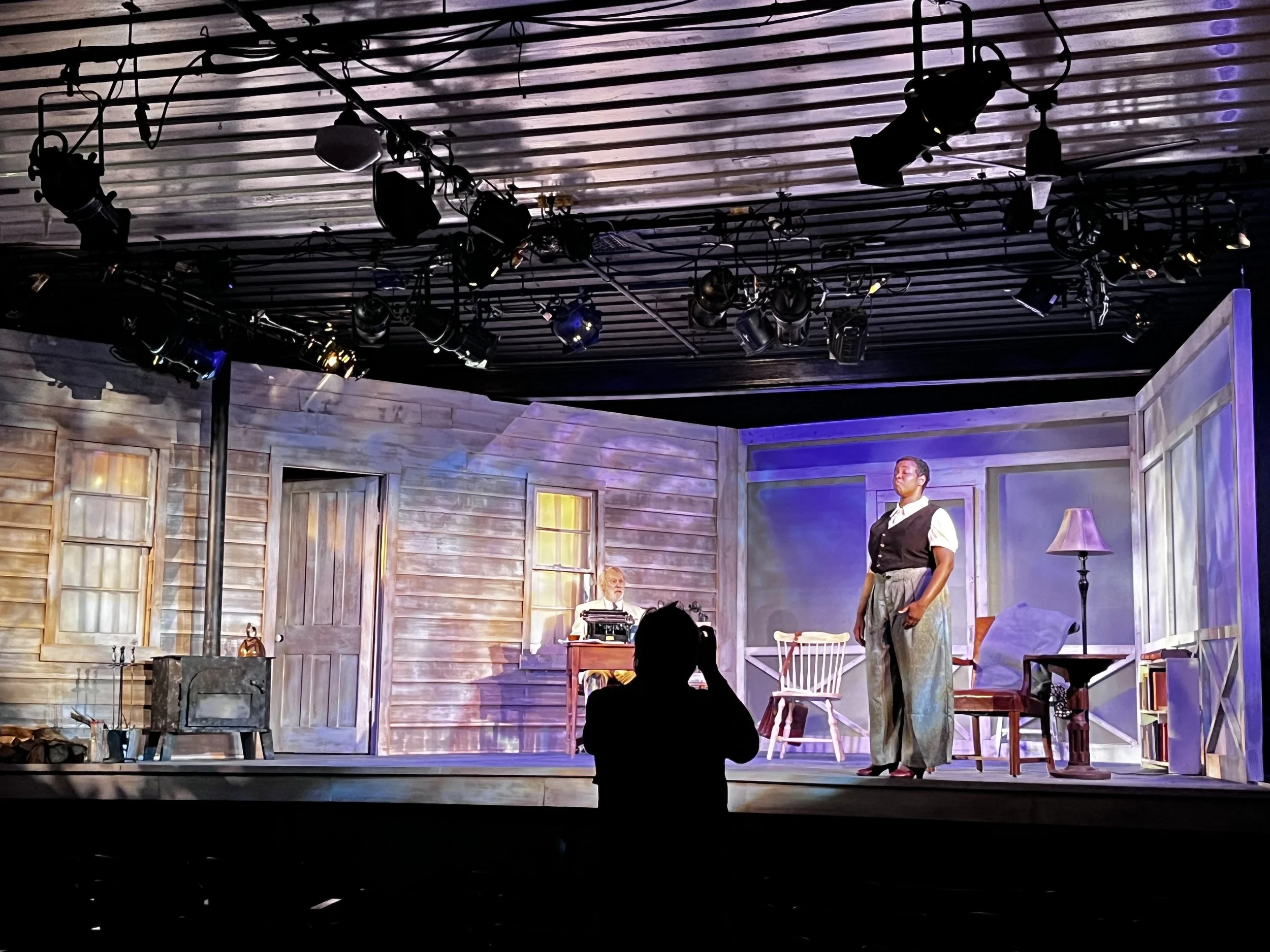
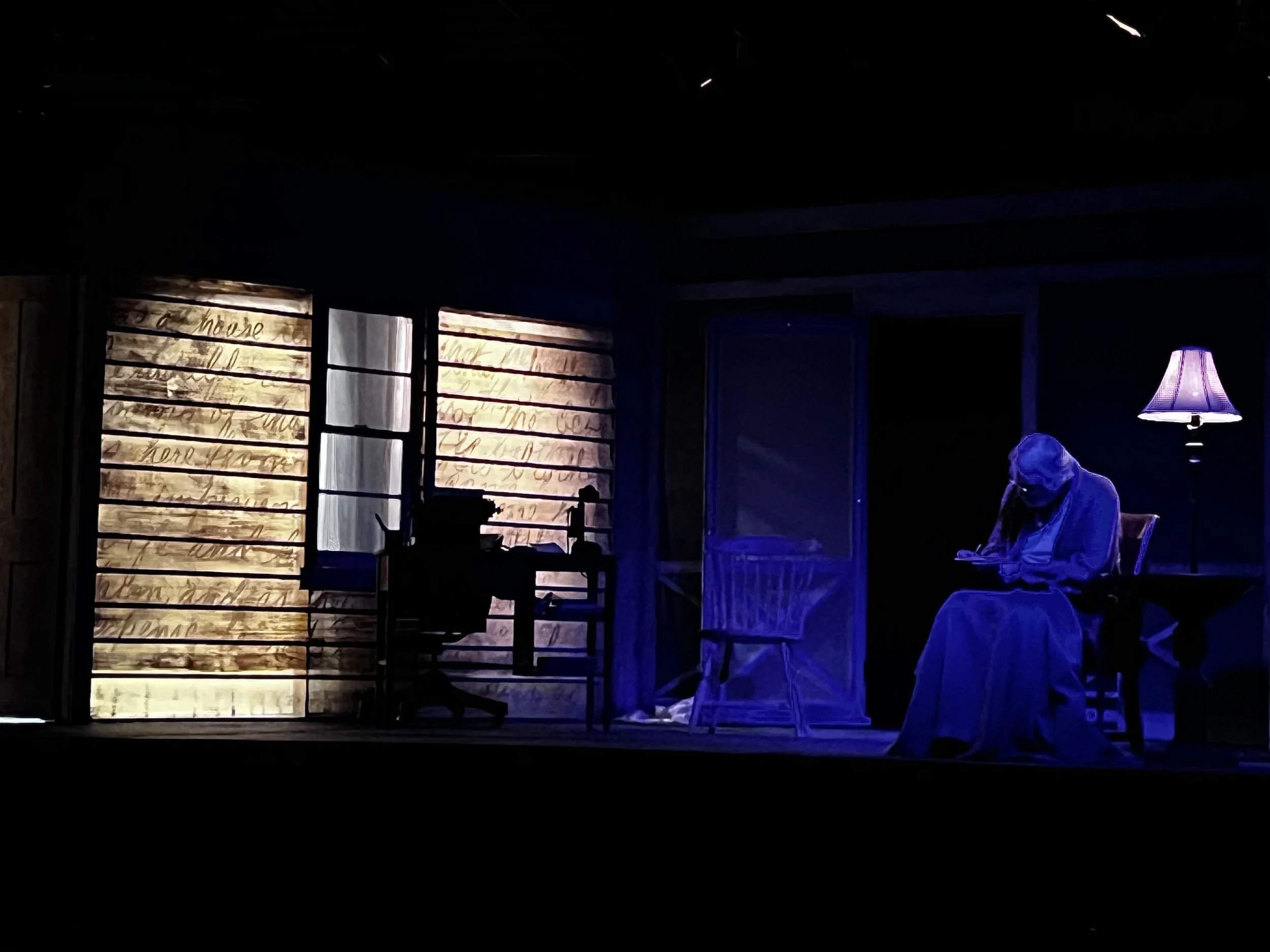
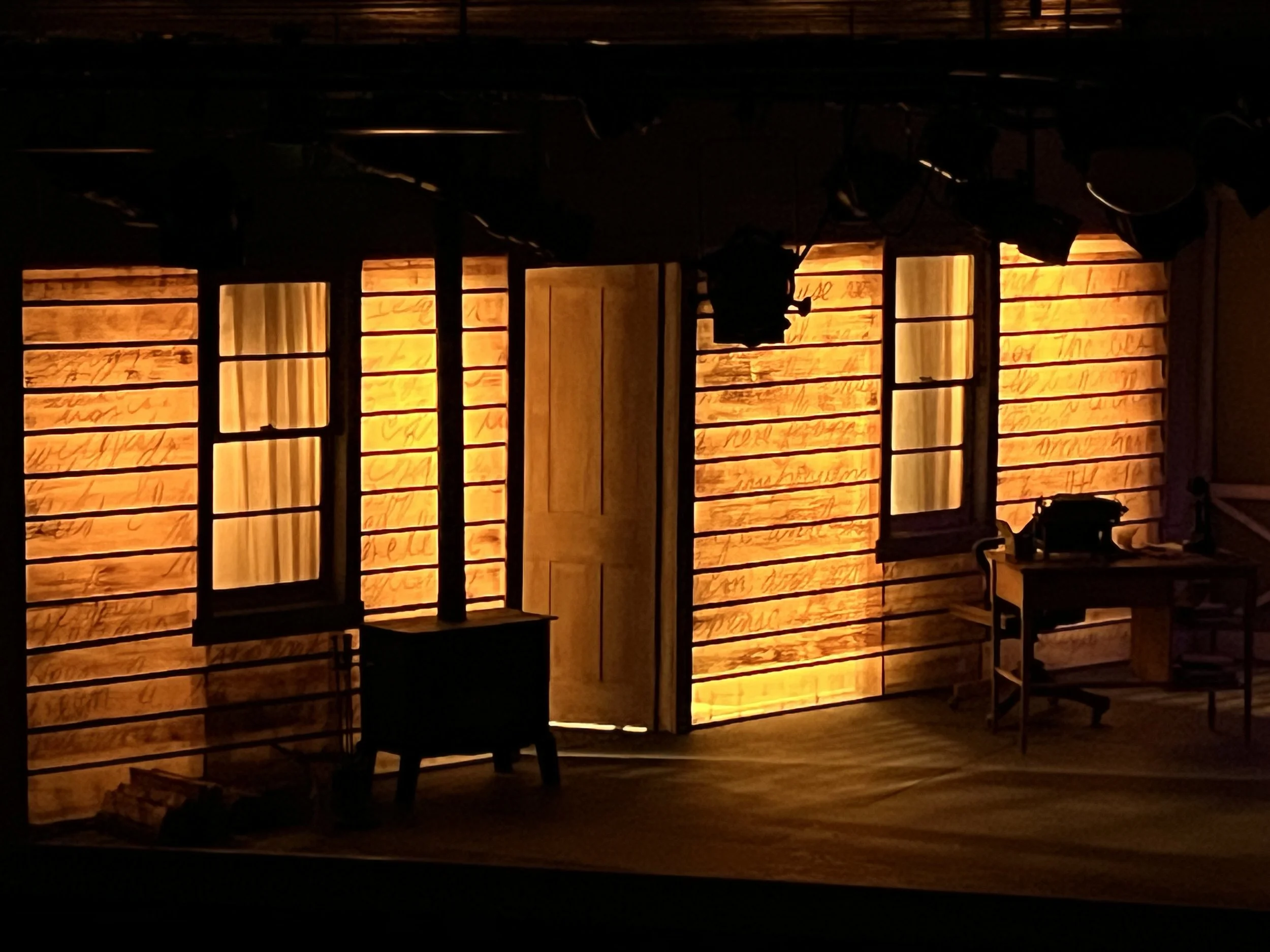
Audience members would come up to the walls and touch them nightly trying to figure out the magic. Most assumed it was projection.
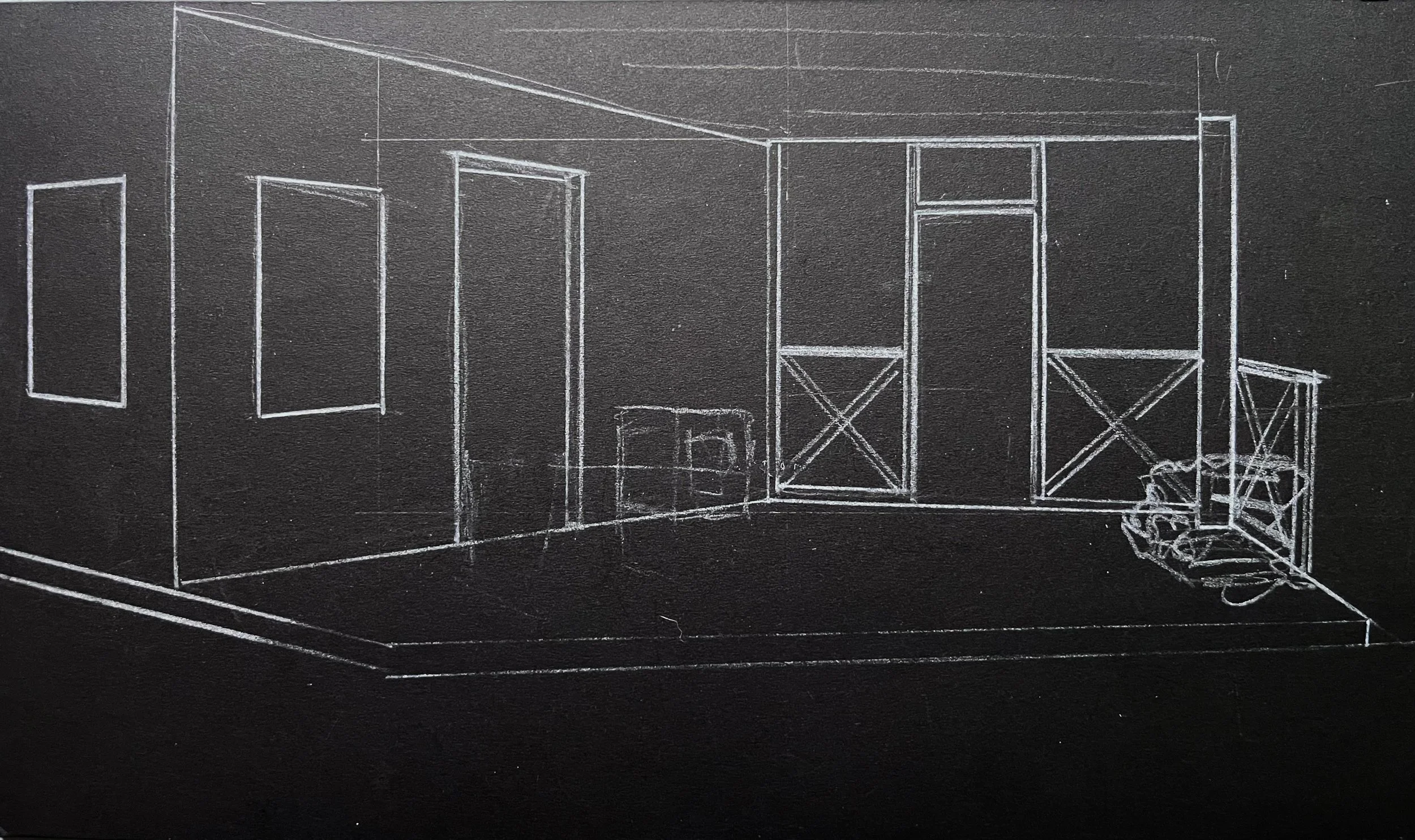
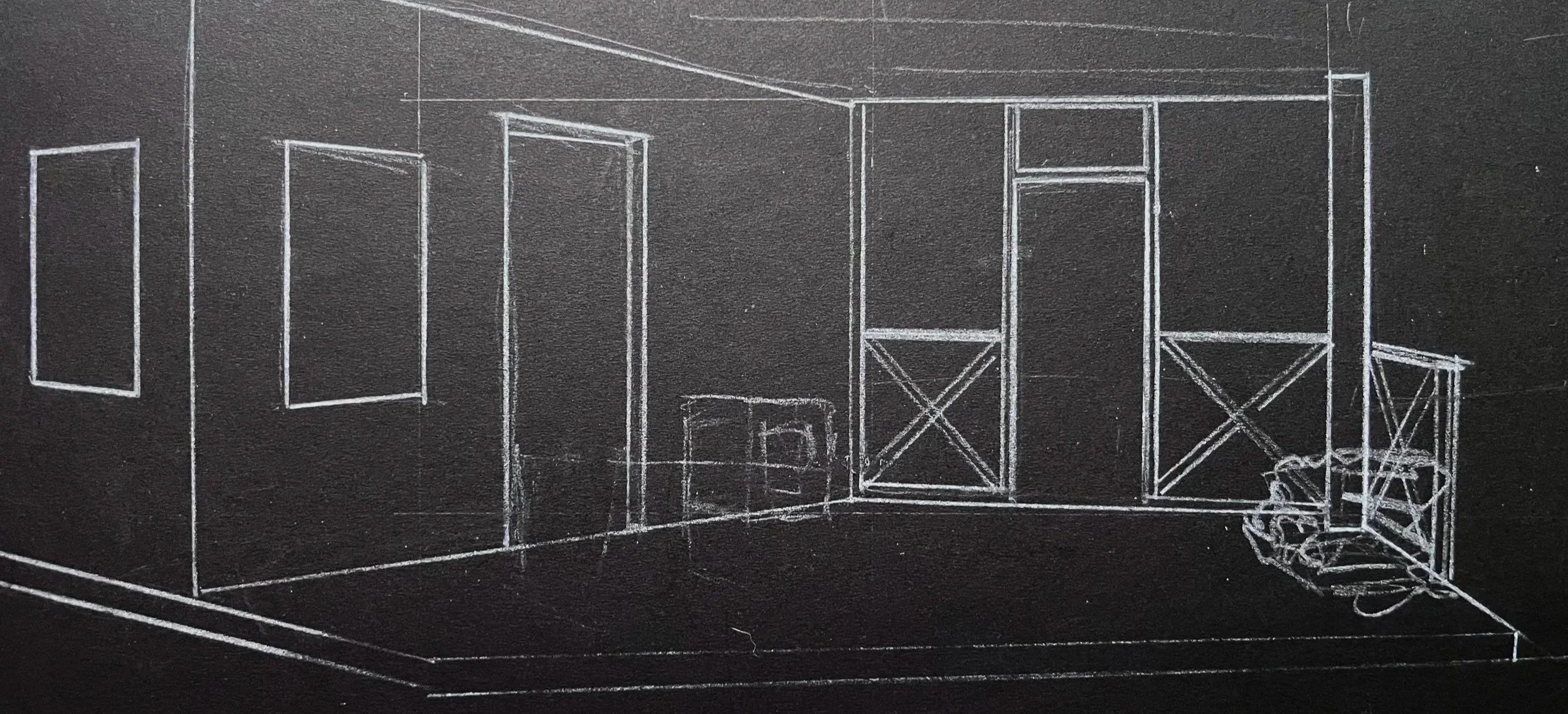
Early Concept sketch.